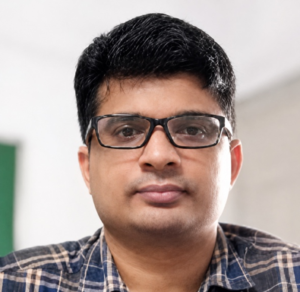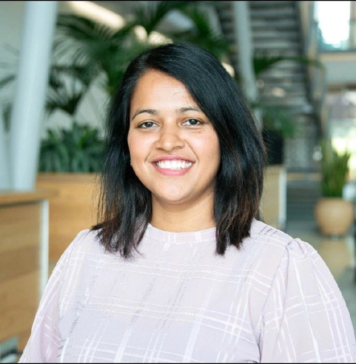
To begin, could you briefly describe your current roles at AlphaKhoj and EkStep, and the core problems you are working on today?
Most of us take reading for granted, so completely that we forget it was ever something we had to learn. But for millions of children across India, that skill never arrives. According to a national level survey by ASER, over 50% of Grade 5 children in India struggle to read text designed for Grade 2.
Imagine this situation, a 10 year old, in school every day, surrounded by words they cannot decode – unable to follow a lesson, unable to ask for help without exposing themselves. That child either starts acting out, or they go quiet. Either way, the system slowly loses them. This the core problem I solve at EkStep as a Learning Scientist – addressing foundational literacy crisis at scale, particularly within government school.
However, literacy isn’t a one-size-fits-all journey. Approximately 10-15% of children face specific challenges due to neurodivergence, including dyslexia, autism, and ADHD. I founded AlphaKhoj to serve this specific community. While EkStep focuses on scale, AlphaKhoj focuses on specialized depth. Both organizations are unified by a single principle: our solutions are grounded in neuroscience to ensure that learning outcomes aren’t just hoped for, but biologically supported.
Your journey bridges research, startups, and education. What prompted this transition from academia to real-world impact?
My PhD focused on the “reading brain”, specifically, how our neural circuitry rewires itself as we learn to process text. While phonics-based teaching is widely known, my research uncovered something less appreciated: the critical role of visual processing in reading fluency. We were able to identify new factors that explain why some children become fluent readers and others don’t factors that existing theories had not fully accounted for.
The work was going well. Papers were getting published. But I kept running into a familiar frustration: academic findings, however significant, typically take decades to influence what happens in a classroom. And I had something in my hands that felt immediately useful. These were not just theoretical insights, they pointed directly toward how a child could be taught differently, today.
I didn’t want to spend the next decade waiting for academia to carry that forward. I wanted to build something with it.
Was there a defining moment that shifted your focus toward building solutions rather than pursuing a traditional research path?
People often expect a pivot story a clear before and after. There wasn’t one. If anything, my entry into research was itself a happy accident: it was only after receiving the interview call that I realised I had applied for a PhD, not a Master’s.
But perhaps that accidental beginning says something true about how I approach things. I was an engineer before I was a researcher, and engineers think in terms of problems. When my PhD supervisors, Prof. SP Arun and Prof. KVS Hari, proposed a project on reverse-engineering the reading brain, I was drawn to it not for the intellectual prestige but because it felt like the most interesting unsolved problem I had ever come across. What is actually happening inside the brain when a child learns to make sense of marks on a page? That question gripped me.
But throughout the research, I kept pulling at a different thread: and so what? I was always more captivated by outcomes with real-world applications and I am grateful to my supervisors for giving me freedom to pursue my own research interests even if it was outside their own comfort zone.
AlphaKhoj addresses real-world problems using data and AI. What gap did you identify, and why does it matter now?
Imagine you are a parent of a child who is struggling to read. You find a good special educator, the sessions are going well but they are expensive, and your child can only attend a few times a week. Progress is slow, measured in a handful of new words each month. Now imagine there was an app that continued that work between sessions using the same content, the same words, the same patterns the educator had just introduced. The child could practice dozens of times a day, in their own time, at no additional cost. The progress wouldn’t just be faster , it could be transformational.
That is the gap AlphaKhoj is built to fill. Not just practice for its own sake, but practice that is aligned with what the educator is teaching and that feeds error patterns back to the educator so they can see exactly where a child is struggling and adapt accordingly. This loop between app and educator is what makes the difference between a tool that supplements learning and one that accelerates it.
The urgency is real. The number of trained special educators in India has not kept pace with the growing number of children being identified with dyslexia, autism, and ADHD, a rise driven partly by better awareness and improved diagnosis. Smartphones have reached communities that specialists have not. AI has matured to the point where genuine personalization is no longer theoretical. We are at a rare intersection, and I think it would be a mistake to wait.
In your experience, what differentiates a successful research-driven startup from one that struggles to scale?
The startups I have watched struggle share a particular pattern: they are still, at heart, running a research project. They are optimizing for intellectual elegance rather than actual use. They are solving the problem they found interesting rather than the problem their users are living with.
The shift that changes everything and it is genuinely hard for researchers to make is accepting that your science is one ingredient, not the product. A startup has to sustain itself. That means doing work that feels far removed from discovery: chasing invoices, rewriting a feature for the fourth time because users keep ignoring it, making decisions with incomplete information on timelines that would make any careful researcher uncomfortable.
For someone starting from scratch, what is the most practical way to translate a research idea into a viable startup?
The most underestimated early step is simply articulating why your idea is a business, not just a contribution. Researchers are trained to justify work on intellectual grounds. Investors, grant committees, and accelerators want to know: who will pay for this, and why will they choose it over what already exists? These are uncomfortable questions if you have not practiced them, but they are clarifying ones and the process of answering them will often change your idea for the better.
Funding is what buys you the time to find out if you are right. There are more routes to it now than most researchers realize: government grants, seed funds, incubation programs, startup competitions. Join an accelerator. The mentorship matters, but the connections matter more. And one last thing: start talking to users earlier than feels comfortable. Not to validate your assumptions to challenge them.
As a Learning Scientist at EkStep, how do you apply research insights to design impactful learning systems at scale?
Let me walk you through the way I think about this with a single concrete example.
Imagine a child learning to distinguish the letter B. I play an audio clip of the sound /b/ and ask them to pick the matching letter from four options on screen. If those options are W, X, Y, and B the task is almost trivially easy. Any child will get it right. But if the options are B, D, P, and G letters that look similar and sound similar the task becomes genuinely demanding. And that difficulty is not a problem. That difficulty is the learning.
Getting this calibration right is at the heart of what I do. Every learning system involves three components that have to work in concert. First, the tasks identifying precisely which cognitive skill a child is missing, whether that is phonological awareness, visual pattern recognition, attention, or working memory, and targeting that gap specifically. Second, the content setting exactly the right level of challenge, the sweet spot where a child is stretched without being overwhelmed. Third, the usage protocols ensuring that content is revisited at scientifically designed intervals, because repetition alone does not create retention. Spacing does.
When any one of these is off, the whole system underperforms. A perfectly designed task with poorly calibrated content produces boredom or frustration. Perfect content with no spaced repetition produces knowledge that evaporates. My job is to hold all three in balance and to make sure that every choice we make is backed by evidence, not intuition. Where the evidence is incomplete, we are actively collaborating with IISc to build it.
AI is rapidly transforming education. What changes do you believe are truly meaningful, beyond the current hype?
Here is what AI can genuinely do, and it is not nothing: it can track where a child is struggling in real time, personalise the next task to exactly their current level, provide patient and infinitely repeatable practice, and give a child in a remote district access to something approximating the guidance of a trained educator. For families who cannot afford specialist support and live hours from the nearest qualified therapist, that is not hype. That is a real expansion of access.
But here is what AI cannot do: it cannot manufacture the willingness to struggle. Reading is hard. It is supposed to be hard. The cognitive effort required to decode, recognise, and eventually internalise written language is not a design flaw it is the mechanism through which the brain builds working memory, fine perceptual discrimination, and general cognitive capacity. You cannot make that process feel effortless and still have it produce the same outcomes. AI can set the stage. It cannot do the work on behalf of the child.
For students navigating uncertain career paths, how should they think about choosing between academia, industry, and entrepreneurship?
I would start by asking a different question entirely: not which path has the best outcomes but what kind of day do you want to live?
Academia offers depth, intellectual freedom, and the pleasure of a community organized around ideas alongside real uncertainty, long timelines to recognition, and the particular loneliness of original work. Industry offers structure, momentum, and the satisfaction of building things that reach people alongside the constraint of working within systems you did not design. Entrepreneurship offers the freedom to define the problem and chase it fully alongside financial uncertainty that can last for years and a solitude that is different in character from academia’s, but equally real.
None of these is obviously better. What matters is which one you will still want to be doing on the hard days and every path has hard days.
There is one practical asymmetry worth naming: moving from academia into industry or entrepreneurship is relatively straightforward. The reverse returning to a faculty path after extended time away can be more constrained, particularly if you have not maintained an active research and publication record during that period. This is not a reason to stay in academia. It is a reason to be deliberate if you leave.
Looking ahead, which skills or mindsets will define successful careers in AI, education, and innovation over the next decade?
A few years ago, at the height of the pandemic, coding was the most sought-after skill in every sector. Today, AI can produce functional code from a plain-language description. The half-life of specific technical skills is shrinking, and pretending otherwise is not useful advice for anyone trying to build a durable career.
What does not shrink is the value of asking the right questions. AI has made information more accessible than at any point in human history which means the scarcest resource is no longer information but the judgment to know what to do with it. The ability to identify what actually matters, to know what question to ask before reaching for an answer, is something no current AI reliably supplies.
If you had to give one piece of advice to young people aiming to create meaningful, real-world impact, what would it be?
Real-world impact does not arrive quickly. The problems worth solving have resisted solutions for a reason they sit at intersections that are genuinely difficult to navigate: between research and practice, between technology and human behaviour, between what is known and what can actually be done at scale. Progress in these spaces is slow, nonlinear, and often invisible for long stretches.
Most breakthroughs have happened at the intersection of people who would never otherwise have been in the same room. Someone had to put them there. Someone had to translate between the scientist and the teacher, the engineer and the community worker, the policymaker and the child sitting silently in the back of a Grade 4 classroom. Be willing to be that person.