Chronic inflammatory diseases (CIDs) have emerged as one of the most pressing global health challenges of our time. Responsible for nearly 41 million deaths annually, these conditions disproportionately affect low- and middle-income countries, where approximately 77% of fatalities occur. In India alone, chronic diseases account for nearly 63% of all deaths, underscoring their profound impact on both healthcare systems and quality of life.
At the heart of many life-threatening disorders including atherosclerosis, cancer, and autoimmune diseases—lies persistent, dysregulated inflammation. Despite advances in biomedical research, developing therapies that can precisely modulate inflammatory pathways without disrupting essential physiological processes remains a significant challenge.
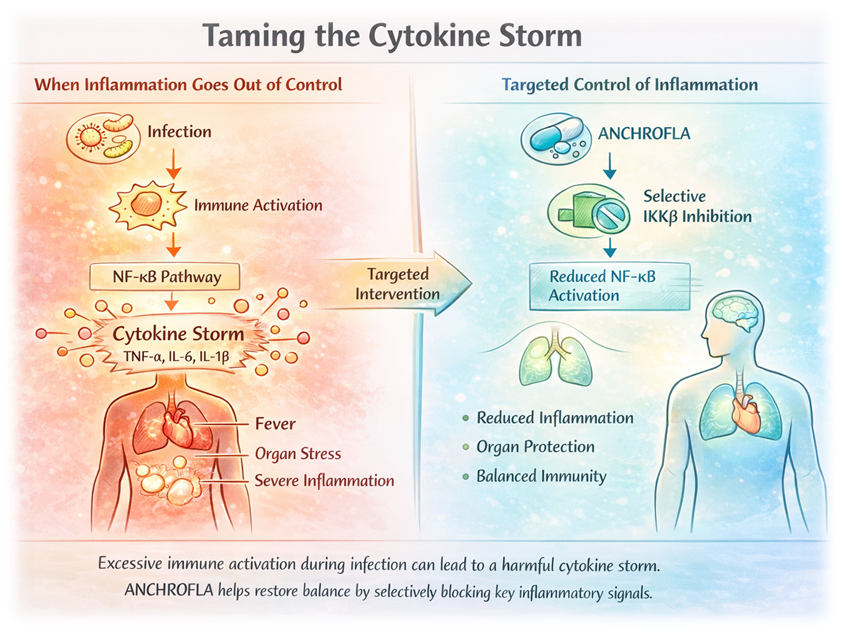
One of the central regulators of inflammation is the NF-κB signaling pathway, a master controller of genes involved in immune and inflammatory responses. Activation of this pathway is tightly regulated by the IκB kinase (IKK) complex, particularly its two catalytic subunits, IKKα and IKKβ. Among these, IKKβ plays a dominant role in driving NF-κB activation in response to key inflammatory stimuli such as TNF-α, IL-1β, and lipopolysaccharide (LPS).
In this context, we introduce a novel small-molecule IKKβ inhibitor designed to modulate this critical pathway. The compound demonstrates the ability to attenuate NF-κB activity and reduce the production of harmful inflammatory mediators, highlighting its therapeutic potential across a broad spectrum of chronic inflammatory conditions. Importantly, the compound minimizes off-target interactions, offering a safer therapeutic profile. As the burden of chronic inflammatory diseases continues to rise, targeted strategies such as IKKβ inhibition represent a promising direction for next-generation therapeutics.