What inspired you to develop this new approach to nose reshaping surgery?
Despite being called plastic surgery, the ultimate goal of aesthetic rhinoplasty is not to create a different face, but to refine existing features while preserving individuality. The best rhinoplasty is often the one that goes unnoticed, where patients simply look like the best version of themselves.
Traditional augmentation rhinoplasty has long relied on techniques that alter the native dorsal anatomy and place grafts directly beneath the skin. While effective, these methods can be associated with prolonged healing, postoperative irregularities, and outcomes that may evolve unpredictably over time. Preservation Push-Up Rhinoplasty was developed to address these limitations while maintaining the natural contour of the nasal dorsum.
For readers unfamiliar with rhinoplasty, what problem does this new technique aim to solve?
Several augmentation techniques are currently available, among which diced cartilage and fascia (DC-F) remains widely practiced. However, the postoperative course with DC-F is highly dependent on patient compliance and is often associated with a prolonged healing phase. Patients frequently need to manipulate or mould the graft during the healing period, creating uncertainty regarding the final outcome. These challenges highlighted the need for a more stable and predictable method of dorsal augmentation.
How is this method different from the traditional techniques surgeons commonly use today?
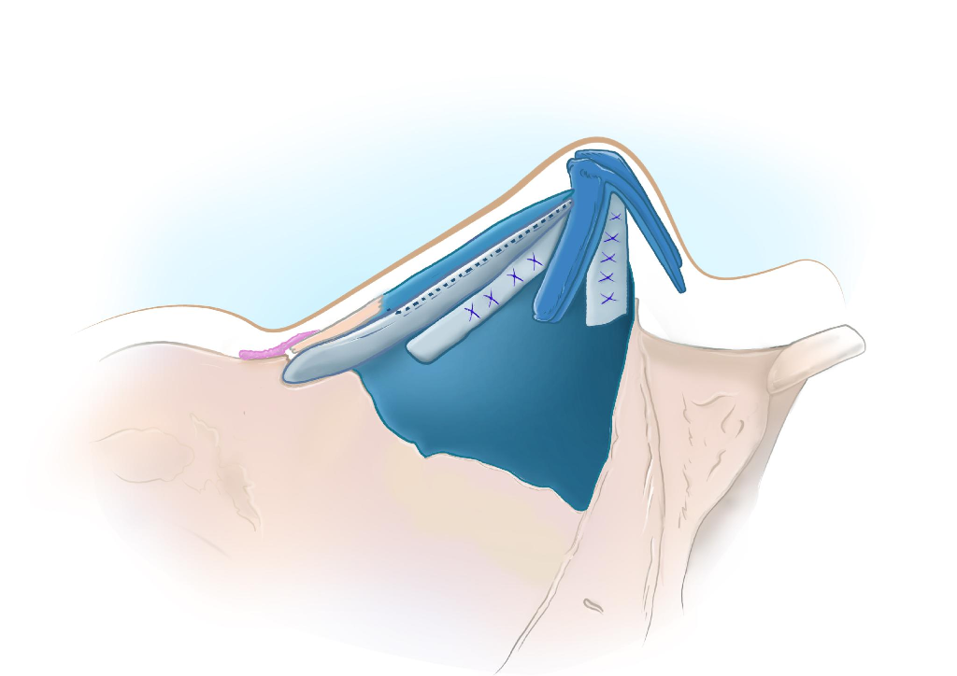
As its name suggests, Preservation Push-Up Rhinoplasty preserves the dorsal framework. Instead of positioning the graft between the skin and the dorsum, the graft is placed beneath the preserved dorsum. This allows the patient’s natural dorsal contour to remain in direct contact with the skin. The graft itself is meticulously sculpted and customized to the exact dimensions required for augmentation and has therefore been termed the Dorsal Preservation Graft (DPG).
By retaining the native dorsal architecture, the natural dorsal aesthetic lines remain intact, allowing the skin to drape over the patient’s own anatomy rather than over a graft. This creates a softer transition, a more authentic appearance, and results that are better integrated with the rest of the face.
Why is it important to preserve the natural structure of the nose during surgery?
Preserving the natural structures helps maintain structural integrity while enhancing aesthetics. By respecting native anatomy and minimizing unnecessary dissection, the technique promotes predictable healing, preserves nasal function, minimizes postoperative irregularities, and maintains the natural dorsal aesthetic lines. Patients benefit from a nose that not only looks natural immediately after recovery but continues to age naturally over time.
The increasing demand for natural-looking outcomes has changed the way rhinoplasty is perceived today. Patients no longer seek a surgically altered appearance; rather, they seek refinement that complements their existing facial features. Preservation Push-Up Rhinoplasty aligns well with this philosophy by utilizing and respecting the native dorsal anatomy instead of replacing it.
What benefits can patients expect from this approach compared with conventional procedures?
From a patient’s perspective, the advantages are significant. Healing appears quicker and more predictable. Unlike traditional DC-F augmentation, patients are not required to mould the graft during recovery. Eyewear can generally be resumed one month after surgery, a considerable improvement over conventional approaches. Most importantly, patients often report that the outcome feels like their own nose, only better proportioned and more refined. The psychological comfort of recognizing oneself after surgery should not be underestimated.
The predictability of healing, reduced postoperative manipulation, and improved patient comfort further contribute to the appeal of this technique.
Were there any surprising findings or lessons you learned while developing and refining this technique?
As with any innovation, the development of this technique was not without challenges. The procedure demands a high level of surgical expertise and specialized training, making reproducibility a key concern during its development. Efforts were therefore made to simplify critical surgical steps, modify the DPG design to improve accessibility, and refine the harvesting approach so that it could be readily adopted by surgeons familiar with rhinoplasty principles. Additional refinements, including a dedicated method of stabilization of the cephalic end of the graft, were introduced to improve reliability and reduce complications.
The successful publication of this technique validated years of refinement and clinical experience. More importantly, it introduced a concept that aligns with the broader evolution of modern rhinoplasty, moving away from resection and replacement toward preservation and restoration.
How might this work influence the future of cosmetic and reconstructive nose surgery?
Preservation Push-Up Rhinoplasty represents more than a new augmentation method; it reflects a paradigm shift in aesthetic nasal surgery. Owing to its broad range of indications, this technique can be applied in the majority of patients with an intact nasal cartilaginous framework. By combining aesthetic enhancement with preservation of structural integrity and function, this approach may help establish new standards for aesthetic nasal surgery.
Its emphasis on natural results, long-term stability, and reduced morbidity could encourage wider adoption of preservation principles and inspire the development of more refined, anatomy-respecting surgical techniques in the future. In the end, the success of rhinoplasty is not measured by how much a nose has changed, but by how naturally it belongs to the face. Preservation Push-Up Rhinoplasty was developed with exactly this goal in mind. By preserving the native dorsum while providing the desired augmentation, the technique allows surgeons to achieve results that are aesthetically pleasing, structurally sound, and functionally stable. It represents not just a new method of augmentation, but a shift toward a more anatomy-respecting and patient-centred approach to rhinoplasty.