What inspired you to focus on foot and mouth disease in sheep, and why is this issue important for farmers and livestock health?
As per the 20th Livestock Census-2019 All India Report, the total livestock population is 536.76 million in India, while the total sheep is 74.26 million heads (13.83%). Both sheep and goat play a pivotal role in livelihood security of small and marginal farmers as well as landless, marginal and small farmers in India. It is an important source of income to farmers particularly in disadvantageous regions in the country. Sheep with multi-facet utility play an important role in the socio-economic livelihood of the rural mass of India and its agrarian economy. But, foot and mouth disease (FMD) severely constrains the productivity of the animal and its health. The total economic loss due to FMD in sheep is reportedly due to multifaceted factors e.g., mortality, loss in wool yield, reproductive failure, loss in body weight, complications due to secondary pathogens including cost of treatment etc. The total loss per infected sheep due to FMD was estimated to be Indian rupees (INR) 2023 in Indian scenario. Sheep and goat play an important role in the epidemiology and transmission of FMD more importantly in a mixed farming setup accompanied by unregulated movement of animals. Disease control measures are difficult to plan and implement in isolation targeting only a few susceptible species of animals out of a whole range of epidemiologically significant species. FMD being difficult to diagnose clinically in sheep as they are the maintenance host exhibiting mild inapparent symptoms and lesions of the disease. Hence, the diagnosis of FMD in these species becomes of paramount significance. Further, as sheep is susceptible to FMD and largely they are co-habited with cattle in the mixed farming setup, silently infected sheep can pose a significant challenge in the country and prospects of FMD control programme under government-sponsored Livestock Health and Disease Control Program (LHDCP).
Why is foot and mouth disease often difficult to detect in sheep compared with other livestock animals?
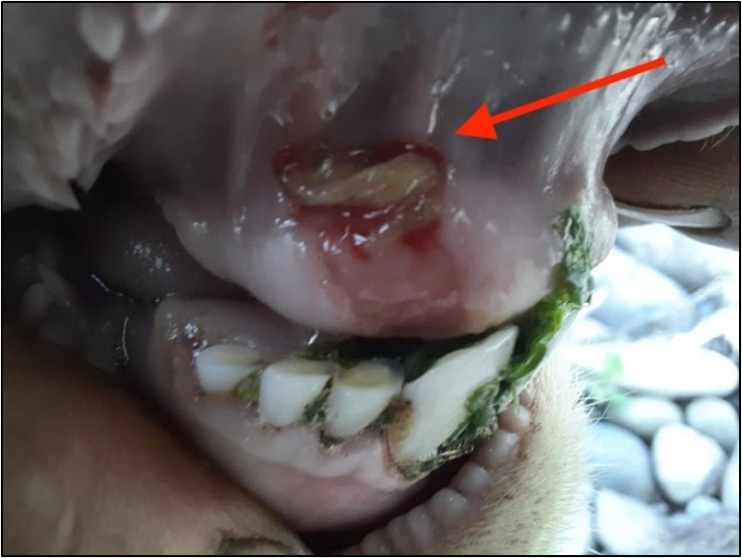
Unlike cattle and pig, sheep exhibit less florid and milder clinical signs and lesions of FMD. Very often, lameness will be the first symptom to appreciate. Further, the collection of clinical samples from the mildly developed lesions in the infected animals becomes impossible that constrains the clinical diagnosis. Mere collection of swab samples also very often goes negative in antigen and genome detection systems.
In simple terms, how does the blood test developed in your study work?
The developed serological test demonstrates the reliability and feasibility of using 3AB3 NSP indirect ELISA as an affordable tool to identify sheep exposed to FMDV. This immunodiagnostic assay because of its high sensitivity and specificity has the potential to be employed in FMD control and eradication programme with efficient sero-detection of infected/infected sheep. Further, this NSP ELISA has been shown to be a high throughout, simple, low-cost and effective method for detection of FMDV NSP antibodies in sheep population. Considering the unique necessity and economic challenges, this indirect species-specific serological assay with high diagnostic performance attributes can be pretty useful for large-scale application in FMD surveillance in sheep in India.
What were the most important findings of your research?
As the disease takes a mild course in sheep, clinical tissue materials from unapparent lesions are often not available. Confirmation through symptomatic diagnosis and laboratory testing of lesion tissue material is therefore hardly possible. Under such situation, serological detection of infection-specific FMD virus (FMDV) antibodies may help detecting the virus-exposed animal, subclinical or persistent infection in retrospect. The overall diagnostic sensitivity of the assay was estimated to be 92.11%, while the diagnostic specificity on naïve and vaccinated animals varied at 97.4% and 94.42%, respectively. This ‘in-house’ developed indirect ELISA can be applied in large scale serosurveillance of FMD in sheep.
How could this test help veterinarians and farmers identify infections that might otherwise go unnoticed?
On serology platform, demonstration of antibodies to FMD virus (FMDV) nonstructural proteins (NSPs) is considered to be the paramount indicator of virus activity irrespective of the serotype and vaccination status. FMD being difficult to diagnose clinically in sheep and unavailability of clinical samples due to lack of frank lesions in most of the cases, serological detection of FMDV NSP antibodies, an indicator of infection remains as the only option amenable to large scale serosurveillance to gather evidence of virus circulation in retrospect. As sheep exhibit less florid clinical signs of FMD and the collection of clinical samples from the mildly developed lesions of infected animals becomes impossible, it constrains the clinical diagnosis. Under such circumstance, application of molecular assays and serotyping ELISA that depends upon the clinical tissue materials, become difficult to provide a confirmatory laboratory diagnosis. Therefore, the clinician is left with no option other than drawing a blood sample as the only sample of choice and convenience that can help detecting the virus activity in retrospect using this developed indirect ELISA.
What impact could this technology have on livestock health, disease control, and food security in countries like India?
The test demonstrates the reliability and feasibility of using 3AB3 NSP indirect ELISA as an affordable tool to identify sheep exposed to FMDV. This immunodiagnostic assay because of its high sensitivity and specificity has the potential to be employed in FMD control and eradication programme with efficient sero-detection of infected/infected sheep. Further, this NSP ELISA has been shown to be a high throughout, simple, low-cost and effective method for detection of FMDV NSP antibodies in sheep population. Considering the unique necessity and economic challenges, this indirect species-specific serological assay with high diagnostic performance attributes as well as low production cost seems to be pretty useful for large-scale application in FMD surveillance in sheep in India thereby strengthening the control strategy of FMD in the country. Control of FMD will indirectly ensure the better health status of animals and food security subsequently.
What are the next steps for this research, and how do you hope it will contribute to the future of animal disease surveillance?
With such relatively cheaper diagnostic ELISA with good efficacy, huge number of random serosurveillance can be conducted at different sheep dominating belts of the country that will further support the government endorsed FMD control programme in India. Further, the persistence of FMDV in sheep can be studied deciphering its carrier status.