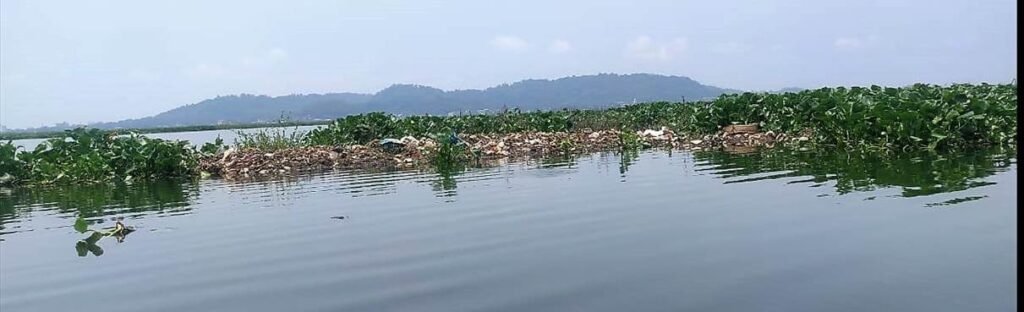
Wetlands are regarded as the most valuable ecosystems providing several important ecosystem services including creating a natural habitat for diverse species of plants and animals, recharging groundwater aquifers, preventing floods by acting as a natural sponge absorbing excess rainfall, regulating the climate. However, with increasing urbanization, urban wetlands have become major sinks for pollutants from various anthropogenic sources. Among these pollutants, the presence of microplastics (MPs) has become a pressing concern because of the ecotoxicological risks they pose and also because they act as vectors, adsorbing hazardous chemicals like heavy metals, polyaromatic hydrocarbons (PAHs) and biological pathogens. The combination of microplastics and these co-contaminants often produces a synergistic effect increasing their health risks in humans and other organisms.
Plastics form the basic structural element of all types of products for human use, but due to the mismanaged handling of these plastic wastes they have become a burden on the environment. Environmental degradation processes such as ultraviolet radiation, mechanical abrasion, wind and water induce the fragmentation of larger plastic debris into microplastics (MPs), defined as solid polymer particles ≤5 mm in size. The term “microplastics” refers to plastic particles measuring 5 mm or less in size. Microplastics can be classified as primary, which are intentionally manufactured at microscopic sizes for specific applications, and secondary, which are formed through the breakdown of larger plastic debris such as bottles, tires, or textiles. Microplastics are generally divided into four shape profiles, fibres, fragments, films and sphere. MPs can also be classified by the type of polymer, with some of the most common plastics produced globally being polypropylene, polyethylene, polyvinyl chloride, polystyrene, polyethylene terephthalate and polyurethane etc. Modern lifestyles are full of single-use plastic items such as straws and cups. It’s thought that we use plastic cutlery once for an average of three minutes, but it remains in the environment for hundreds of years. Single-use plastic, including food packaging, is also one of the biggest contributors to plastic pollution. Other major sources commonly identified include tire wear particles, synthetic textile fibers, plastic packaging fragments, agricultural plastics, and treated wastewater effluent. Scientists suspect microplastics are also blown through the atmosphere by wind and settle once it snowed or rained. Different factors affect the behavior, fate, and toxicity of microplastics including their degree of degradation, association with microorganisms, and the number and concentrations of pollutants adsorbed onto the surface of the microplastic.
Wetlands are especially vulnerable to microplastic pollution because they act as natural sponges absorbing excess storm water runoff. Rivers, stormwater runoff, and drainage systems carry plastics from urban and agricultural areas into wetlands where dense vegetation physically traps floating debris and fine plastic particles. High organic matter in the wetland sediments binds and retain microplastics in the wetlands. Understanding MPs input in wetlands is crucial to link their pollution level with land use, industrial activity, urbanization, and hydrological dynamics . Seasonal factors such as rainfall, flooding, and water level fluctuations further influence the transport, redistribution, and concentration of microplastics, while human activities including road traffic, wastewater discharge, agricultural plastic use, and recreational littering intensify inputs.
Deepor Beel Wetland, located in the Brahmaputra floodplain, is home to a variety of birds, including migratory species. It is demarcated as a bird sanctuary and is an ecologically significant Ramsar site. Deepor Beel supports an impressive count of fish species diversity comprising 55 species, 21 families, and 9 orders. The wetland serves as a critical, high-density breeding and staging ground for over 70 migratory species and 200 total bird species. It provides vital food resources, particularly during winter, for threatened species like the Lesser and Greater Adjutant Stork, Spot-billed Pelican, and Baer’s Pochard. The wetland provides critical food resources and livelihood to local fishermen and provides ecosystem services to nearby communities. However, Deepor Beel, faces severe anthropogenic pressures, including rapid urbanization and an adjacent dumping site, increasing its vulnerability to MPs contamination. These MPs pose great ecotoxicological risks to fish and birds that feed on these fish species. Ingestion of these MPs may cause reduced physical blockages, blocked digestive systems, reduced feeding and growth rates, inflammation, false satiation, and reduced fecundity affecting the fish population. Living organisms also get tangled in microplastics. A study revealed that omnivorous fish ingest more microplastics than carnivorous and herbivorous fishes explaining that omnivorous organisms ingest a wide range of food, which exposes more microplastics to the fishes. Throughout the trophic level, the microplastics can get ingested by smaller organisms and can be transferred from the prey to predators, thus increasing environmental toxicity levels. The microplastics resemblance to plankton and grains make them easy targets for fishes ingestion. The seasonal sampling, most importantly pre-monsoon and post-monsoon sampling of microplastics is necessary as the temperature, intense solar radiations, strong winds and seasonal water fluctuations significantly influence the fate transport. Microplastic pollution in freshwater wetlands is not a single-dimensional problem, but a complex issue involving their accumulation in water and sediments, uptake by organisms, associated ecological risks, and transfer across trophic levels. By combining field observations, biological analyses, source apportionment, and ecological modelling, researchers can provide a comprehensive picture of how microplastics enter wetland systems, persist over time, and influence ecosystem functioning.