What first inspired you to study the relationship between city design and waste generation, and how did this research begin?
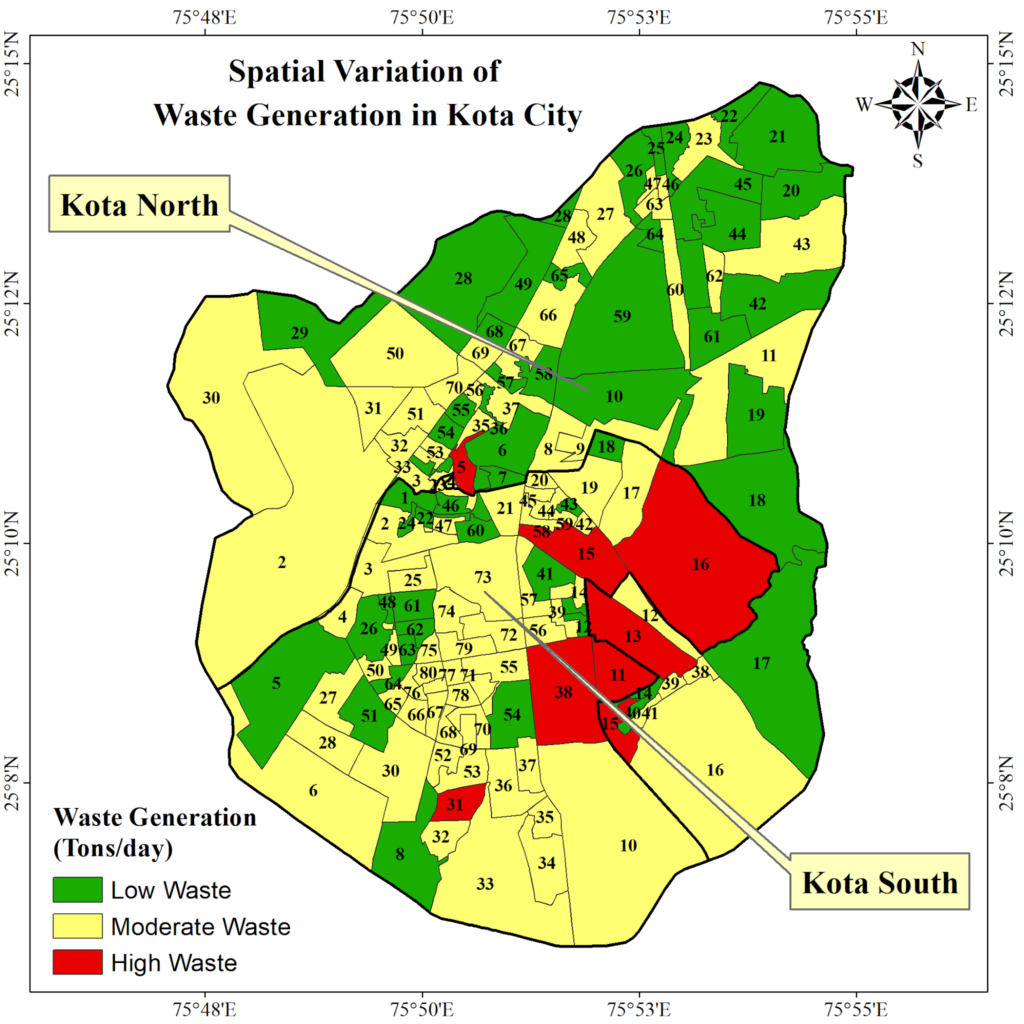
The idea began with a simple observation waste is not evenly distributed across a city. While examining different wards of Kota, some areas consistently showed much higher waste accumulation than others. This raised an important question: is waste generation only a function of population, or does the way a city is structured also play a role?
This curiosity led to exploring waste generation from a spatial perspective, focusing on how different parts of the city behave differently based on land use, population density, and urban activity patterns.
Can you explain in simple terms why different parts of a city produce different amounts of garbage?
Different parts of a city serve different purposes. In Kota, areas dominated by dense residential settlements and mixed land use tend to generate higher amounts of waste, while peripheral or less developed areas produce much less.
In simple terms, waste depends on what activities are taking place in a particular area. Residential zones generate regular household waste, commercial areas such as markets produce large volumes in shorter periods, and mixed-use areas combine multiple activities, leading to even higher waste generation.
Your study shows that land use and population density influence waste generation, why is this important for city planning and waste management?
These findings highlight that waste generation is closely linked to land-use patterns and population density. However, many cities still rely on uniform waste management strategies, assuming that all areas generate similar amounts of waste.
In reality, some wards generate several times more waste than others. This means planning needs to be location-specific. High-density and mixed-use areas require more frequent collection and better infrastructure, while low-density areas may need fewer resources. Such targeted planning can improve efficiency, reduce costs, and support more sustainable waste management.
What surprised you the most when you mapped waste generation across different wards of Kota city?
One of the most striking observations was the clear spatial clustering of waste generation. Instead of being randomly distributed, high waste generation was concentrated in specific wards, particularly those with dense population and mixed land use.
There was also a large variation between wards. Some areas generated several times more waste than others within the same city. This clearly showed that urban structure plays a major role in shaping waste patterns.
Do you think studies like this can help cities become cleaner, more efficient, and more sustainable in the future?
Yes, definitely. Such studies provide a more realistic, data-driven understanding of how cities function. By identifying where waste is generated most intensely, city authorities can allocate resources more effectively and reduce inefficiencies.
Integrating spatial analysis into waste management can help cities move from reactive approaches to more planned and efficient systems, ultimately contributing to cleaner and more sustainable urban environments.
What are the next steps, and what still needs to be explored to better manage waste in rapidly growing urban areas?
The next step is to move toward dynamic and real-time waste management systems. Cities are constantly evolving, and waste generation patterns change over time. Integrating geospatial analysis with data analytics and emerging technologies can help monitor and predict these changes more effectively. There is also a need to better understand how socioeconomic factors, lifestyle patterns, and seasonal variations influence waste generation. Developing integrated decision-support systems that connect urban planning, waste management, and environmental sustainability will be essential for managing waste in rapidly growing cities.