What inspired you to study the effects of dietary fats, particularly unsaturated fatty acids, on behavior and aging?
I have been interested in pursuing research that relates to our day-to-day life, such as the health impact of dietary choices. Excessive dietary intake, particularly increased caloric intake, is associated with various metabolic diseases. In recent years, researchers have begun to recognize that fats can influence sleep, metabolism, gut health, and even aging. However, unsaturated fatty acids especially attracted my attention because they are commonly considered “good fats,” yet their broader physiological effects are still not fully understood. This inspired me to investigate how these dietary components shape behavior, lifespan, and health during aging.
In simple terms, could you explain what unsaturated fatty acids are and how they differ from other types of fats?
Unsaturated fatty acids (USFA) are considered healthy fats and are mainly enriched in food sources such as nuts, seeds, plant oils, etc. They differ from saturated fatty acids in their chemical structure, as they contain one or more double bonds, and have beneficial effects on brain function and heart health by reducing low-density lipoprotein (LDL) and increasing high-density lipoproteins (HDL).
How does diet influence sleep patterns and daily activity in a way that a general reader can easily understand?
Diet plays a role beyond being a calorie provider. Food influences how our body functions throughout the day, cumulatively affecting our health as we age. Dietary nutrients affect the cellular level by balancing hormones, energy maintenance, metabolism, brain activity, and muscle function, together influenced by the internal clock that regulates sleep-wake cycles. Our study suggests that dietary fatty acids influence sleep behavior and activity patterns, reinforcing the idea that “what we eat influences how well we act and rest to maintain daily rhythms.”
Your study highlights links between diet, lifespan, and gut health. Could you explain these connections in an intuitive way?
This fascinates me to explain, as gut health in relation to diet has been ignored for a long period. The gut is not just a digestive organ, but also a communication center in our body. It interacts with multiple systems in the body. Microbes living in our gut are known as gut microbiota, which communicate and maintain balance between different systems such as the immune, nervous, and metabolic systems.
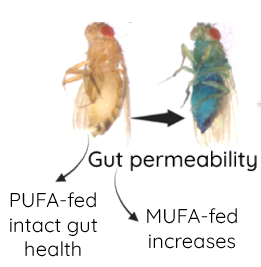
Our study suggests that the gut acts as a major cost-bearing and regulatory organ that closely responds to dietary changes. The composition and microbial load of the gut microbiota are strongly influenced by diet, which in turn affects nutrient processing, inflammation, and overall physiological health. Certain dietary fats can alter the gut environment, and our dietary intervention studies indicate that diet, gut health, and lifespan are interconnected through strong biological cross-talk that helps maintain overall body function and homeostasis.
During your research, what was the most surprising or unexpected finding that stood out to you?
One of the most surprising findings was how strongly dietary interventions impact multiple biological systems simultaneously. We expected dietary fats to affect metabolism, but it was particularly interesting to see effects on sleep patterns, activity, fitness traits, and aging-related characteristics as well. An experimentally striking observation was how distinct dietary fatty acids and gut-associated phenotypical responses were depending on the quality of fatty acids.
How can your findings help people make better dietary choices in their daily lives, and what are the next important questions in this field?
Our findings highlight that dietary fatty acids from plant sources can influence many aspects of health beyond simple nutrition. While studies in model organisms cannot be directly applied to humans without further research, they provide valuable insight into the biological effects of diet and its impact on metabolism. The study suggests that the quality and quantity of dietary fats play important roles in sleep fragmentation (disturbance), gut health, and lifespan in a sex-dependent manner, revealing that one should consume nutritional fatty acids in the context of an individual’s metabolism, lifestyle, and biological sex.
Further research needs to focus on understanding the precise avenue of the gut-brain axis and the molecular mechanisms behind these observed interactions, and on exploring how diet can support long-term health and health span in both biological sexes.