What are hemoglobin variants, and why is it important to correctly identify even rare variants that may not initially cause obvious symptoms?
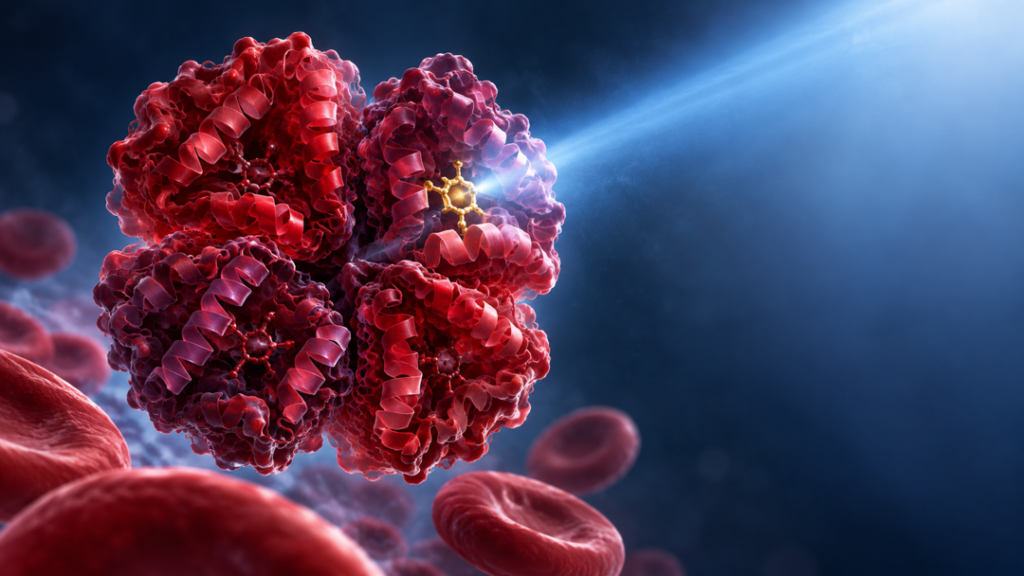
Hemoglobin is the protein in red blood cells that carries oxygen around the body. In healthy adults it exists mainly as three normal types: HbA, which makes up the vast majority, together with a smaller amount of HbA2 and a trace amount of HbF (fetal hemoglobin). Changes in the genetic makeup of these globin chains lead to hemoglobin variants and thalassemia. Variants usually result from small genetic changes that alter the structure of a globin chain, whereas thalassaemia results from reduced production of one or more globin chains. Sickle cell disease is the best-known example, but hundreds of rarer variants have also been described.
Importantly, carrying a haemoglobin variant does not necessarily mean being ill. Many carriers remain completely healthy, particularly when the variant is inherited from only one parent. Identifying these variants is nevertheless important. A healthy carrier can pass the variant to their children, and if both parents carry certain variants, their child may inherit a serious disorder. Some variants may also cause problems during physiological stress, such as illness, surgery, low oxygen levels or pregnancy. Finally, certain variants can interfere with laboratory tests such as HbA1c, potentially producing misleading results and inappropriate clinical decisions.
Why can rare or compound hemoglobin variants be difficult to identify using routine laboratory tests?
Rare or compound hemoglobin variants pose significant diagnostic challenges because routine laboratory tests like cation-exchange HPLC (CX-HPLC) and capillary electrophoresis (CE) rely fundamentally on physical properties such as charge and hydrophobicity to separate hemoglobin fractions. Consequently, if a rare variant involves an amino acid substitution that does not alter the net charge of the hemoglobin molecule, it will not produce a distinct peak or band, effectively rendering it invisible to these screening methods. Furthermore, rare variants often exhibit retention times or migration patterns that overlap significantly with wild-type hemoglobins like HbA or HbA2. This co-migration can lead to the misclassification of a rare variant as a common one or cause it to be masked entirely by the dominant normal hemoglobin peak. In compound heterozygotes, where more than one variant is present, the complexity increases as peaks may merge, or shift making it difficult to distinguish individual components.
Your research combines techniques such as capillary electrophoresis, HPLC, and mass spectrometry. What does each technique contribute, and why is combining them more effective than relying on a single test?
Each technique probes a different physical property of hemoglobin and combining them compensates for the limitations inherent to any single method. Capillary electrophoresis separates hemoglobin variants by their charge-to-size ratio in a liquid-filled capillary, providing high-resolution separation and accurate quantification of common variants and hemoglobin fractions such as HbA, HbA2, HbF etc. CX-HPLC separates hemoglobins by charge and retention time, offering rapid, reproducible screening with reliable quantification. Mass spectrometry determines the precise molecular mass and, when combined with peptide mapping, identifies the exact amino-acid substitution information neither CE nor CX-HPLC can provide.
Relying on one method risks missed or misidentified variants: two different variants can co-migrate on CE or CX-HPLC and appear identical, while MS resolves ambiguous or novel variants that don’t match known reference patterns. Together, they give resolution, quantification, and definitive structural identification—necessary for confident diagnosis.
Your studies have identified unusual combinations of hemoglobin variants, including Q-India/D-Punjab and G-Coushatta/D-Punjab. What makes such cases particularly challenging and scientifically interesting?
These are compound heterozygous states two different variant hemoglobins inherited together, rather than a single variant paired with normal hemoglobin. That makes them challenging on several fronts.
First, both variants can co-migrate or overlap on CE or CX-HPLC; without confirmatory testing, one variant can mask the other, or the combination can be misread as a single abnormal peak. Second, the challenge lies partly in rarity: each of these variants is uncommon individually, so their co-occurrence is exceptionally rare, with very limited reference data on how they interact analytically or clinically.
Scientifically, these combinations are valuable precisely because they’re rare: each confirmed case adds to a very limited body of data on genotype-phenotype correlation, informs accurate carrier counselling, and helps refine diagnostic algorithms for labs encountering similar unusual patterns.
How can more accurate identification of rare hemoglobin variants influence patient care, genetic counselling, and family screening?
More accurate identification of rare hemoglobin variants has direct implications across three interconnected areas of care.
For patient management, correct identification prevents misdiagnosis and inappropriate treatment. A variant misread as a common disorder, or one that distorts a routine test like HbA1c, can lead to unnecessary interventions or missed management of an unrelated condition such as diabetes. Precise identification flags variants that behave differently under stress surgery, hypoxia, or pregnancy allowing clinicians to anticipate complications rather than react to them.
For genetic counselling, knowing the precise variant (rather than simply “abnormal hemoglobin”) allows accurate risk assessment. Different variants carry different inheritance patterns and clinical severity when paired with other variants, so precise characterization is essential for counselling couples, on the likelihood and severity of disease in their children.
For family screening, identifying a variant in one individual opens the door to testing relatives who may be silent carriers. This is particularly important for rare or novel variants, where a single index case can reveal that the variant is present within a family or community.
Collectively, accurate variant identification shifts hemoglobinopathy care from reactive to proactive improving individual outcomes while building the reference data needed to guide future diagnoses.
Can an integrated laboratory approach help reduce unnecessary genetic testing while still ensuring that difficult cases receive molecular confirmation when needed?
Yes. An integrated approach using CE or CX-HPLC as first-line screening, reserved for cases where results are clear and consistent handles the majority of samples without ever needing molecular testing, since most common variants are readily identified by their characteristic separation patterns.
Molecular or mass spectrometry-based confirmation is then applied selectively, only when results are ambiguous: overlapping peaks, unexpected quantification, discordance between CE and CX-HPLC, or a pattern that doesn’t match known reference variants. This tiered strategy avoids blanket use of expensive, time-consuming molecular testing on every sample, while still ensuring that genuinely difficult or novel cases—like unusual double-variant combinations get the definitive characterization they require.
The result is a system that’s both cost-effective and diagnostically reliable: routine cases are resolved quickly and cheaply, and laboratory resources are concentrated where they add real value.
Looking ahead, how do you see advances in mass spectrometry and other diagnostic technologies changing the way rare hemoglobin disorders are detected and characterized?
Looking ahead, the greatest advances may come not simply from newer instruments, but from how we combine and interpret different technologies. CE, CX- HPLC and low-resolution mass spectrometry can identify many haemoglobin variants, while molecular testing and high-resolution mass spectrometry can help resolve particularly unusual cases. However, identification by any technology ultimately depends on the quality and breadth of its reference library. Expanding these libraries to include more rare variants, their molecular characteristics and, where available, associated clinical information could substantially improve recognition and confidence in identification. In the future, integrating laboratory findings, molecular data and clinical information may allow rare haemoglobin variants to be identified more accurately and meaningfully.