What inspired you to explore lithium not just as a resource, but as an emerging environmental concern in the Anthropocene?
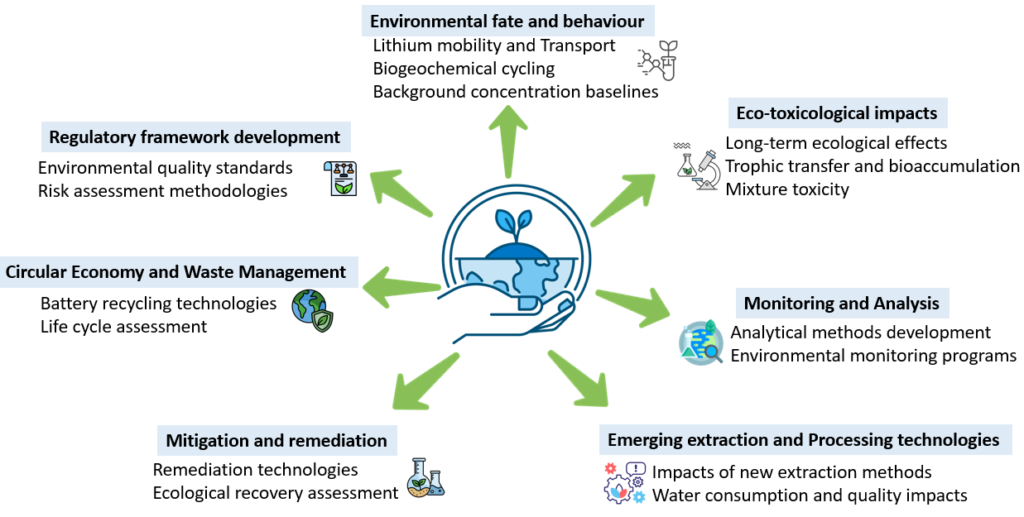
My exploration of lithium as an emerging environmental concern in the Anthropocene was inspired by the paradox of its indispensable role in the sustainable energy transition and the overlooked ecological disruptions it causes. The unprecedented surge in global lithium demand rising from 28,100 metric tons in 2010 to over 130,000 in 2023, projected to reach 1.5 million by 2030 has intensified mininsg, processing, and disposal activities, particularly in regions like the Lithium Triangle, Australia, and China. These operations unleash lithium’s high mobility and solubility into ecosystems, elevating concentrations in water, soil, and air far beyond natural backgrounds (over 1000 μg/L in waters, 300-500 mg/kg in soils), disrupting microbial communities, plant physiology, and aquatic life while posing human health risks like thyroid dysfunction and renal impairment. As an environmental science researcher, I was compelled by lithium’s lifecycle footprint from water-intensive brine extraction depleting arid aquifers to improper battery disposal leaching toxins into landfills revealing regulatory gaps and the urgent need for remediation like phytoremediation and advanced adsorbents. This duality in the Anthropocene era, where lithium powers green tech yet threatens biodiversity and public health, drives my commitment to innovative strategies balancing innovation with ecological stewardship.
In simple terms, how does lithium move through the environment from mining and industrial use to soil, water, and living organisms?
Lithium enters the environment mainly from mining and industrial activities, then spreads widely due to its high solubility and mobility. In mining, open-pit operations for minerals like spodumene disturb land, leaching lithium into groundwater via rainwater and waste rock piles, while brine extraction in salt flats pumps vast water volumes (2.2 million liters per ton), depleting aquifers and concentrating lithium in evaporation ponds that seep into rivers. Processing crushes ores, uses acids to dissolve lithium, and generates tailings and dust that blow into air or run off into soils and streams, with facilities showing soil levels up to 500 mg/kg – 25 times natural. Industries like battery, ceramics, and pharma discharge wastewater (5-120 mg/L lithium) directly or via leaks, and transportation spills add more. Once released, dissolved lithium flows easily: in water, it stays bioavailable without precipitating (Kd <50 L/kg), traveling via runoff and leaching to sediments; in soils, low pH and competing ions like Na+ boost its movement through clays downward to groundwater or laterally via erosion. Plants take it up via roots (using K+ channels), accumulating in leaves (up to 1600 mg/kg in tobacco), passing to herbivores and fish (BCF 10-500), entering food webs and humans through contaminated water (up to 170 μg/L) or crops. This cycle amplifies risks in the Anthropocene.
Your study highlights both environmental and health risks, what are the most critical concerns people should be aware of today?
Today’s most critical concerns from lithium’s environmental and health risks stem from its surging demand for batteries, amplifying contamination near mining sites like Chile’s Atacama Desert, where water use depletes aquifers by 1.4m yearly and elevates levels over 1000 μg/L in waters. Ecologically, high mobility disrupts soil chemistry (300-500 mg/kg), impairs plant growth via ROS and nutrient imbalances (e.g., reduced yields in crops like rice, tomato), alters microbial communities, and harms aquatic life-Daphnia LC50 16.4 mg/L, invertebrate diversity drops 15-40%, with bioaccumulation in food webs (BCF 10-500). For human health, chronic exposure via drinking water (1-170 μg/L globally) links to thyroid issues – a 3.5-fold hypothyroidism risk above 25 μg/L-renal impairment, neurological effects, and pregnancy risks like fetal growth changes, especially vulnerable groups (women, children, kidney patients). Improper battery disposal adds 97,000 tons yearly to landfills, leaching persistently, while regulatory gaps hinder mitigation amid 500% demand growth by 2030. Awareness and sustainable practices are urgent.
Lithium is essential for clean energy technologies and how do we balance its benefits with its environmental footprint?
Lithium powers the clean energy revolution through lithium-ion batteries in electric vehicles and renewables, with demand soaring from 28,100 tons in 2010 to over 130,000 in 2023, projected to hit 1.5 million tons LCE by 2030, enabling decarbonization. Yet its environmental footprint from water-guzzling brine extraction (2.2 million liters/ton, aquifer depletion in arid Lithium Triangle), mining waste leaching into soils (300-500 mg/kg), and industrial discharges elevating waters over 1000 μg/L threatens ecosystems, crops, and health (thyroid risks above 25 μg/L). Balancing this requires lifecycle management: advance recycling to recover 95%+ lithium from batteries, cutting virgin mining; deploy selective remediation like MOFs (30times efficiency) and phytoremediation with accumulators (e.g., Brassica juncea up to 3500 mg/kg shoots); optimize extraction via direct lithium extraction (DLE) tech slashing water use 50-70%; enforce harmonized regulations beyond varying global standards; and innovate circular economy models tying battery producers to take-back schemes. Policy must integrate ESG metrics, fund R&D for sodium alternatives, and monitor hotspots while scaling lithium’s green benefits true Anthropocene stewardship fuses tech progress with ecological safeguards for sustainable energy without sacrifice.
You discuss remediation strategies such as phytoremediation and advanced materials, how promising are these approaches for real-world applications?
Phytoremediation and advanced materials show strong promise for real-world lithium remediation, though scaling remains challenging. Phytoremediation leverages lithium-accumulating plants like Brassica juncea (hyperaccumulator reaching 3500 mg/kg in shoots), Helianthus annuus (1200 mg/kg leaves), and Nicotiana tabacum (1600 mg/kg), which sequester lithium via root uptake through HKT/NSCC channels, vacuolar storage, and antioxidant defenses against ROS-induced stress, effectively extracting from soils without harsh chemicals. Field-applicable for low-to-moderate contamination (e.g., post-mining sites), it cuts costs 50-70% versus excavation, enhances soil health via root systems, and suits agriculture-adjacent areas, though slow (months-years), weather-dependent, and limited to root zones <2m deep, requiring biomass disposal protocols. Advanced adsorbents like modified clays, metal-organic frameworks (MOFs), and selective ion exchangers excel in water treatment, achieving 90-99% removal even at trace levels (Kd >50 L/kg), with MOFs offering 30x higher selectivity than conventional coagulants (<20% efficiency), ideal for industrial effluents (5-120 mg/L) and brines. Lab-to-pilot successes near battery plants show regeneration for reuse, slashing operational costs, but high upfront synthesis expenses and fouling in complex matrices hinder widespread adoption. Hybrid approaches such as phytoremediation for soils, MOFs for waters and policy incentives could make them viable today, bridging lithium’s green benefits with ecosystem protection.
What role do policy and regulation play in managing lithium contamination, and where do you see the biggest gaps globally?
Policy and regulation are pivotal in managing lithium contamination by establishing enforceable standards for extraction, processing, waste discharge, and disposal across lithium’s lifecycle, ensuring monitoring, compliance, and accountability amid surging demand. They mandate environmental impact assessments for mining (e.g., water use limits in brine operations), emission controls for processing dust and effluents, and extended producer responsibility for battery recycling to curb landfill leaching of 97,000 tons annually. Effective frameworks drive remediation funding, tech adoption like direct lithium extraction, and international cooperation on transboundary pollution from hotspots like the Lithium Triangle. Yet, the article reveals biggest global gaps in harmonized standards regulations vary wildly across jurisdictions, with lax oversight in major producers (South America, Australia, China) versus stricter EU rules, creating enforcement inconsistencies and regulatory arbitrage. Emerging pollutants like lithium lack specific thresholds in drinking water or soils worldwide, despite health risks (e.g., hypothyroidism above 25 μg/L), while recycling mandates lag behind 500% demand growth by 2030, allowing improper disposal to persist. Absent unified global guidelines, ESG reporting, and incentives for circular economy models, contamination escalates unchecked; closing these via WHO-level limits, binding trade agreements, and capacity-building in developing nations is urgent for sustainable stewardship.