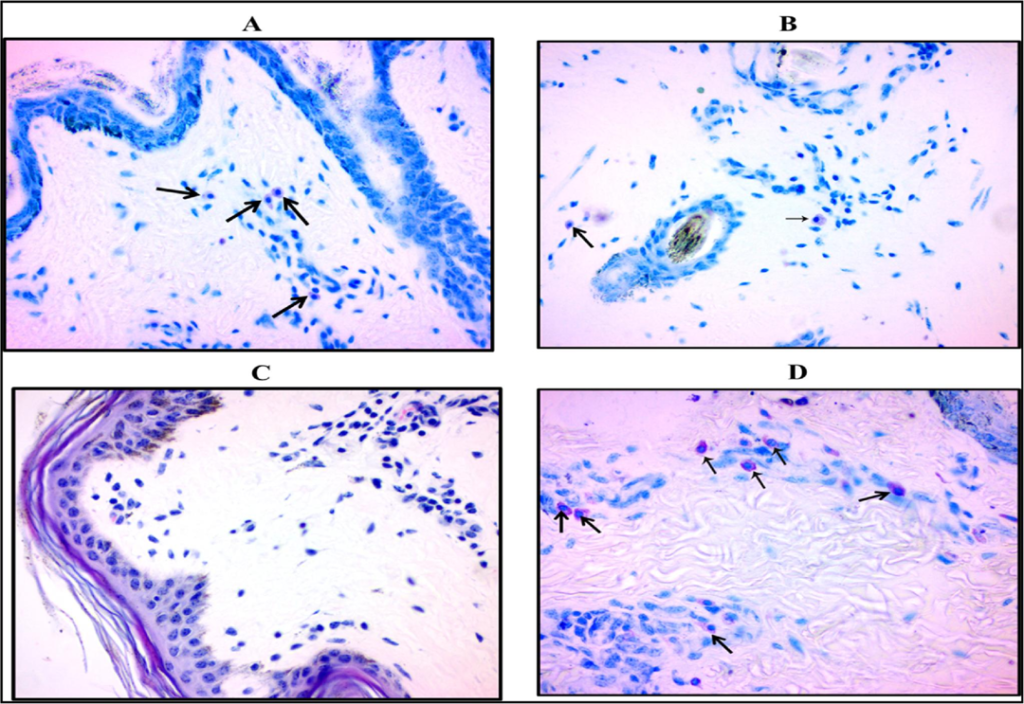
Ticks and tick-borne diseases are among the major challenges affecting milk production in India, causing considerable economic losses to dairy farmers. In addition to the merely visible presence of parasites on the animals, their impact goes far beyond. Ticks act as vectors of important haemoprotozoan and bacterial diseases; besides this, tick infestation can cause irritation, skin damage, blood loss, and poor body condition. The resulting compromise of animal health and productivity can cause substantial economic losses for livestock farmers.
Chemical acaricides have been the major method of tick control for decades. However, repeated application of chemical treatment is not an appropriate long-term solution. Problems associated with arising resistance, high treatment costs, contamination of environment and the need for repeated application for tick control highlight the importance of complementary approaches. One such promising approach is to explore the cattle breeds possessing natural resistance.
Our recent work on Kankrej and crossbred cattle provides an important example in this regard. A study involving 116 naturally exposed cattle, 27 Kankrej and 89 Holstein Friesian (HF) crossbreds revealed that HF crossbreds carried significantly higher tick burdens than Kankrej cattle under field conditions. The study also investigated the biological basis of this difference through examination of skin immune responses and candidate immune genes. This study can further be viewed together with transcriptomic evidence generated from indigenous and crossbred cattle exposed to Theileria infection. The RNA-Seq study identified substantial differences in gene expression and immune-related pathways between infected and non-infected cattle and between indigenous and crossbred animals. The combined evidence points towards a broader concept that indigenous cattle may possess biological mechanisms that enable them to respond more effectively to important tropical disease and parasite challenges.
Ticks: Concern to animal health, production and livelihood
Ticks are not merely external parasites. Their feeding causes local tissue damage and irritation, while heavy infestation can adversely affect the overall health and productivity of cattle and can transmit several pathogens responsible for economically important diseases. The consequences can be particularly serious for majority small and marginal farmers of India, for whom these animals represent an important source of income and household security. The problem in tropical countries like, India remains greater where cattle are exposed to combinations of heat stress, nutritional limitations, parasites and infectious diseases. Thus, exploring animals that can tolerate these environmental and biological challenges is increasingly important for sustainable livestock production. The Kankrej is one such cattle on which study provides direct evidence differential ticks burden between breeds. HF crossbred cattle showed significantly greater tick loads than Kankrej cattle, demonstrating that the host animal itself is an important component of tick-control biology. The adaptive characteristics of these animals, including their resilience to diseases and parasites, represent valuable genetic resources for future livestock improvement. Our recent study on Kankrej cattle revealed three important features that may contribute to their natural resistance to tick infestation: lower tick burden, stronger cutaneous immune responses, and breed-associated differences in candidate immune genes. These findings highlight the potential of indigenous cattle as valuable genetic resources for improving disease resistance and supporting sustainable livestock production.
Kankrej breed of cattle carried significantly fewer ticks than HF crossbreds under similar management conditions in the field. Further, histopathological examination showed greater mast-cell infiltration in these cattle, not only this, even non-infested Kankrej animals had a comparatively higher baseline mast-cell population than HF crossbreds. Mast cells participate in local inflammatory reactions and release mediators that can influence the response of skin tissue to invading organisms and ectoparasites. Therefore, the higher baseline mast-cell population observed in Kankrej cattle provides a credible biological explanation for their stronger local response to tick attachment.
The candidate immune-related genes CD209 studied was found to be polymorphic in HF crossbreds but monomorphic in the Kankrej population. A significant association was observed for CD209, with the AA genotype showing a substantially higher odds of tick infestation than the AB genotype. However, tick resistance is a complex trait, and the candidate-gene study itself does not establish that CD209 alone determines resistance. Rather, it identifies a potentially useful genetic marker that warrants validation in larger populations.
Lower Tick Burden, Stronger Immunity
The most interesting interpretation from the discussed research is that when a tick attaches to cattle skin, the host does not remain biologically passive. The attachment site initiates local tissue and immune responses. There is marked mast-cell infiltration at tick attachment sites in Kankrej cattle associated with a stronger response than in HF crossbreds. This suggests that Kankrej cattle may be better primed to recognise and respond to tick attack. A faster or stronger local response could make the host environment less favourable for successful tick feeding and persistence.
The additional RNA-Seq information strengthens the broader immunological interpretation. CD14 is involved in inflammatory and innate immune signalling, while CLEC4D is associated with innate immune responses. CD59 is related to the complement system. These findings indicate that infection induces coordinated changes in innate immune-related genes in indigenous cattle. The pathway analysis indicated that In indigenous infected cattle, upregulated genes were enriched in pathways including MAPK, NF-κB, Toll-like receptor, Ras and chemokine signalling, all these are important components of cellular and immune responses. Thus, study provide valuable evidence that the indigenous host has a distinctive capacity to activate immune and inflammatory pathways.
Indigenous Vs. crossbred cattle
The transcriptomic comparison indicated that the upregulated genes in indigenous cattle were associated with functions including phagocytosis, cytokine production and scavenger receptor activity. Several immune-related genes were prominent in this response, including DYSF, SLC11A1, CD300LF, TREM1, EREG, NFIL3, CD14 and CTSH. It is also to be noted that the crossbred cattle also showed enrichment of immune pathways including NOD-like receptor, JAK-STAT, MAPK, NF-κB and Toll-like receptor signalling. Therefore, the correct interpretation is that breed differences may occur in the nature, magnitude, timing or regulation of host responses. Interestingly, when infected indigenous and crossbred animals were directly compared, MAPK, PI3K-Akt and AGE-RAGE signalling pathways were among those enriched in the comparison. Thus, the combined evidence suggests that host resilience is biologically complex and involves multiple genes, pathways and cellular responses.
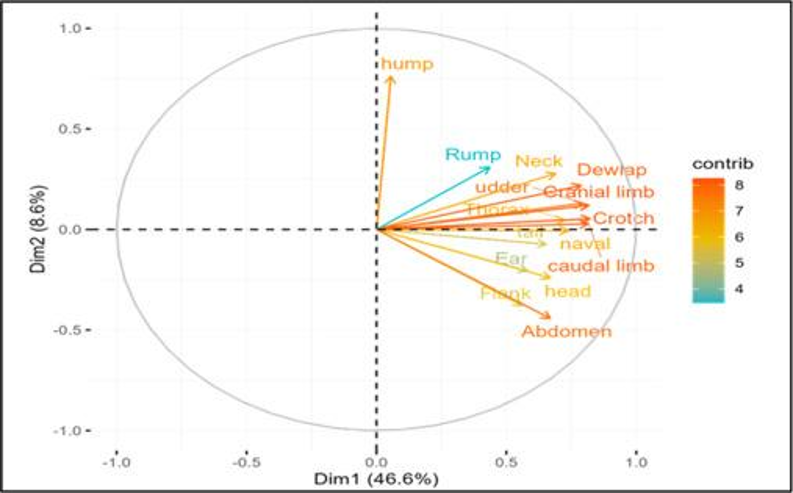
Ticks predilection sites
The distribution of ticks across the body is not random, study identified the crotch, udder, dewlap and limbs as important predilection sites. These regions can provide favourable conditions for tick attachment because of differences in skin characteristics, hair density, moisture, temperature, local microclimate and accessibility. Skin folds and relatively protected regions may also provide favourable conditions for the parasite to remain attached. The finding also has implications that if tick counts are to be used as a measure of resistance, researchers should standardise the anatomical regions examined and consider the effect of season and environmental exposure.
Natural resistance can be harvested
Natural tick resistance is a complex, potentially polygenic adaptive trait, rather than a single-gene characteristic. The Kankrej study provides several possible indicators: actual tick burden, anatomical distribution, skin immune response and genetic variation.The candidate-gene study identified CD209 as particularly interesting because the AA genotype showed 12.89-fold higher odds of tick infestation than the AB genotype. The transcriptomic data provide that no common DEG was identified across all three major comparisons, demonstrating the complexity of the host response.
In practical breeding programmes, animals could first be evaluated for repeated tick burden under standardised conditions. Animals consistently showing lower infestation could then be evaluated for immune and genomic characteristics. Validated markers could eventually be incorporated into breeding programmes along with milk production, fertility, longevity, disease resistance and climate adaptation.
Low dependence on chemical for tick-control
Natural resistance is not at all replacement for veterinary treatment. Instead, it may be one of the components of integrated tick management. If cattle with naturally lower tick burdens can be identified and selectively bred, the overall parasite pressure in a herd may potentially be reduced. Combined with pasture and housing management, regular inspection and appropriate acaricide use, when necessary, this could reduce unnecessary chemical exposure. The Kankrej study specifically highlights the potential of indigenous breeds in sustainable tick-control strategies. The broader transcriptomic findings reinforce the scientific rationale for studying indigenous cattle as reservoirs of adaptive immune variation.
Message for Indian livestock breeding
Many years, cattle improvement programmes have understandably focused heavily on production traits such as milk yield. However, the challenges for livestock production in India is broader. Animals must cope simultaneously with heat, parasites, infectious diseases, variable feed availability and diverse production environments. Indigenous cattle have evolved within these conditions and therefore represent an important reservoir of adaptive genetic diversity.
The Kankrej cattle showed lower tick infestation and a stronger cutaneous mast-cell response than HF crossbreds.
Conclusion
India’s indigenous cattle are more than a heritage resource. They may also represent a valuable biological reservoir of parasite resistance, immune responsiveness and environmental adaptability. Research in Kankrej cattle has demonstrated significantly lower tick burdens than in HF crossbreds and has linked this phenotype with a stronger cutaneous mast-cell response. Candidate-gene analysis has identified potentially useful genetic variation, particularly involving CD209. The ultimate opportunity is therefore to combine phenotypic tick resistance, skin immunology, transcriptomics and genomics to identify animals that are naturally better adapted to parasite and disease challenges.