
When Diabetes and Tuberculosis Collide
Diabetes mellitus (DM) is a group of metabolic disorders characterized by occurrence of elevated blood sugar levels for an extended period. Two types are commonly described, namely, type 1 and Type 2 diabetes. Type 1 Diabetes is a chronic autoimmune disease in which the immune system destroys insulin-producing β-cells (beta cells) in the pancreatic islets. Loss of β-cells causes little or no insulin production, leading to elevated blood glucose (hyperglycemia) and lifelong dependence on insulin therapy. In type 2 diabetes, the patient displays insulin resistance. Due to this sugar accumulates in the blood. Tuberculosis (TB) and diabetes are among the most pressing global health challenges of our time. Individually, each disease affects millions of people every year, but together they create a far more dangerous combination. People living with diabetes are three to four times more likely to develop active tuberculosis and often experience poorer treatment outcomes. While this association has been recognized for decades, one fundamental question has remained unanswered: Why does diabetes make people more vulnerable to tuberculosis?
“Diabetes silently weakens immune defenses, creating a favorable environment where Mycobacterium tuberculosis can survive, replicate, and drive severe disease outcomes”
A Long-Standing Scientific Question
This question has driven much of our research. As scientists, we often begin with observations before understanding the underlying mechanisms. Clinicians had long reported that diabetic patients were more susceptible to Mycobacterium tuberculosis, yet the biological explanation remained incomplete. Was elevated blood glucose simply weakening the immune system, or was it fundamentally changing how immune cells function? Finding the answer became the focus of our work.
The Body’s First Line of Defense
Macrophages are the body’s first responders against M. tuberculosis. These specialized immune cells engulf bacteria and employ multiple defense mechanisms, including the production of inflammatory cytokines, reactive oxygen and nitrogen species, and the restriction of nutrients essential for bacterial growth. Among other nutrients, iron occupies a unique position. While iron is indispensable for normal cellular function, it is equally essential for bacterial survival. As a result, the host carefully controls intracellular iron availability through a process known as nutritional immunity, limiting the pathogen’s access to this valuable resource. In healthy macrophages, iron homeostasis is maintained through coordinated regulation of iron uptake, storage, recycling, and export. During infection, these pathways are dynamically adjusted to limit bacterial access to iron while preserving cellular function. Elevated glucose levels impair phagocytosis, reduce intracellular bacterial killing, alter cytokine production, delay immune activation, and interfere with cellular metabolism. Together, these changes create a permissive intracellular environment where Mtb can survive and replicate more efficiently. Rather than simply reducing immunity, chronic hyperglycemia rewires immune cell metabolism, disrupts inflammatory signaling, and changes the availability of essential nutrients that both host cells and pathogens compete for. These discoveries are reshaping our understanding of tuberculosis in diabetic patients and opening new opportunities for host-directed therapies.
Following the Evidence
Our scientific journey began by examining how chronic hyperglycemia influences macrophage function. In our earlier work, published in Immunologic Research, we demonstrated that prolonged exposure to high glucose significantly compromises the antimicrobial capacity of macrophages. Hyperglycemic macrophages produced lower levels of reactive oxygen and nitrogen species, displayed reduced inflammatory responses, and were less effective at controlling intracellular M. tuberculosis. These findings confirmed that chronic hyperglycemia directly impairs innate immunity rather than merely accompanying diabetes. Although these results explained what was happening, they raised an even more important question: What causes this immune dysfunction?
Looking Beyond Immunity: The Role of Metabolism
The answer emerged when we shifted our attention from immune signaling to cellular metabolism.
Over the last decade, immunometabolism has transformed our understanding of infectious diseases by demonstrating that immune cell function is closely linked to metabolic pathways. Rather than serving only as a source of energy, metabolism actively regulates how immune cells respond to pathogens. We therefore asked whether chronic hyperglycemia was altering metabolic pathways that influence macrophage antimicrobial function.
Iron: The Missing Piece
One pathway immediately captured our attention: iron metabolism.
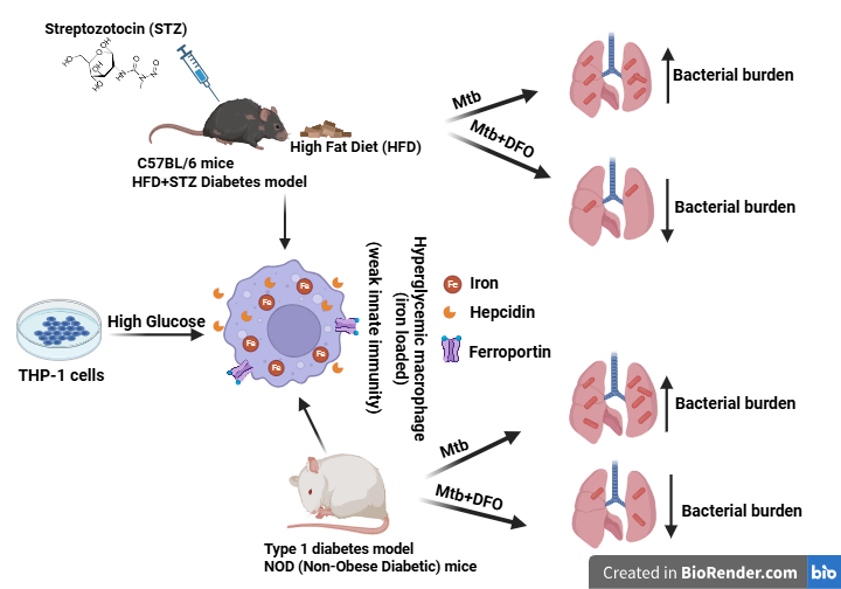
In our recent study published in Iscience CellPress, we discovered that chronic hyperglycemia profoundly disrupts intracellular iron homeostasis. Instead of maintaining tight control over iron availability, macrophages exposed to prolonged high glucose accumulated excessive intracellular iron. We found that hyperglycemia enhanced iron uptake while promoting iron retention, leading to expansion of the labile iron pool-the readily available form of iron that intracellular pathogens can exploit. Rather than restricting bacterial access to iron, hyperglycemic macrophages unintentionally created an iron-rich intracellular environment that favored M. tuberculosis survival.
The consequences extended well beyond nutrient availability. Iron accumulation altered macrophage biology itself. Excess iron promoted oxidative stress, disrupted antimicrobial defense mechanisms, and weakened the ability of macrophages to eliminate intracellular bacteria. In other words, chronic hyperglycemia reprogrammed immune cells into an environment that was increasingly permissive for bacterial persistence.
Can We Restore the Immune System?
Perhaps the most encouraging aspect of our study was its therapeutic implication. By pharmacologically reducing intracellular iron levels, we restored macrophage antimicrobial function and significantly lowered bacterial burden in diabetic mouse models of tuberculosis. These findings provide proof-of-concept that targeting host iron metabolism could complement conventional anti-tuberculosis therapy. Rather than attacking the pathogen directly, host-directed therapies strengthen the immune system itself, potentially improving treatment outcomes while reducing the likelihood of antimicrobial resistance. Our other study reveals that Anti-diabetic drug metformin provides benefits beyond glucose control by reprogramming macrophage iron metabolism during tuberculosis infection. Metformin limits intracellular iron availability and enhances mitochondrial ROS production, creating an unfavorable environment for Mycobacterium tuberculosis survival. These findings highlight iron modulation as a promising host-directed therapeutic approach against tuberculosis, especially in diabetes-associated TB.
The significance of these discoveries extends beyond tuberculosis. Iron dysregulation is increasingly recognized by a wide range of infectious and inflammatory diseases. Our findings suggest that metabolic disorders fundamentally reshape immune cell function by altering nutrient homeostasis, opening new opportunities to investigate how metabolism influences susceptibility to diverse pathogens.
Looking Ahead
Our work has uncovered iron metabolism as a crucial link between diabetes and tuberculosis, but many questions remain. Moving forward, we aim to identify the molecular regulators that drive iron accumulation in macrophages and explore therapies that restore immune function by targeting host metabolism. We hope these discoveries will pave the way for more effective, personalized treatments for tuberculosis and other infectious diseases influenced by metabolic disorders. Another major challenge is understanding the remarkable diversity of macrophages found throughout the body. Alveolar macrophages, recruit monocyte-derived macrophages, and tissue-specific macrophage populations differ substantially in their metabolism and immune functions. Whether hyperglycemia affects each population similarly remains unknown. Recent advances in single-cell RNA sequencing, spatial transcriptomics, proteomics, and metabolomics now provide powerful tools to dissect these cell-specific responses at unprecedented resolution. These technologies will help identify distinct macrophage states associated with protection or disease progression in diabetic conditions.
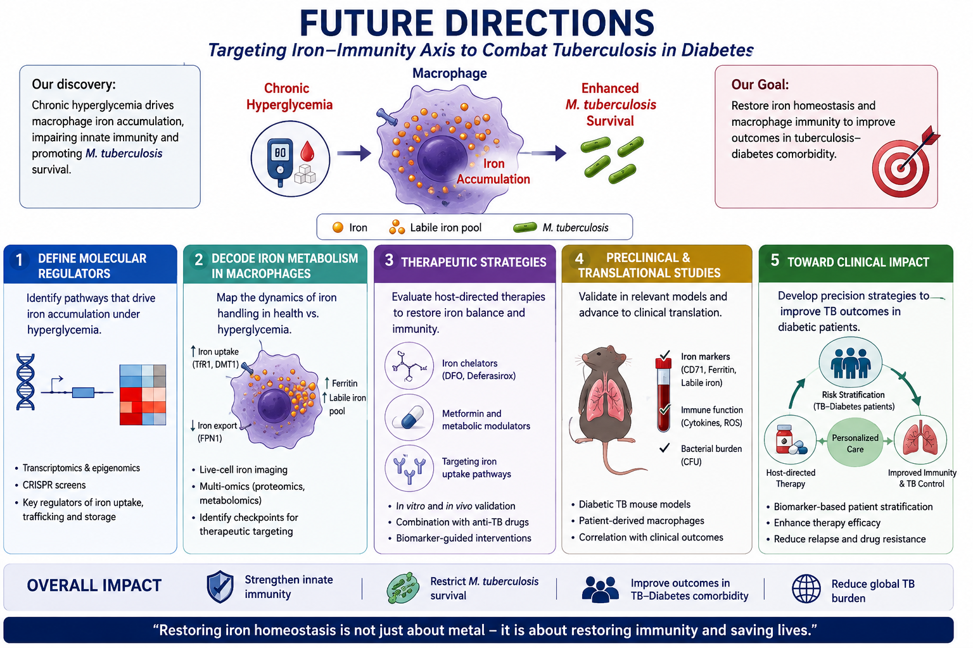
Acknowledgements: Dr. Raje acknowledges financial support of Indian Council of Medical Research (ICMR) by way of Emeritus fellowship. Audience-engaging graphical illustration was created with BioRender and assistance from ChatGPT (OpenAI) and further refined based on the authors’ scientific concepts and expertise.