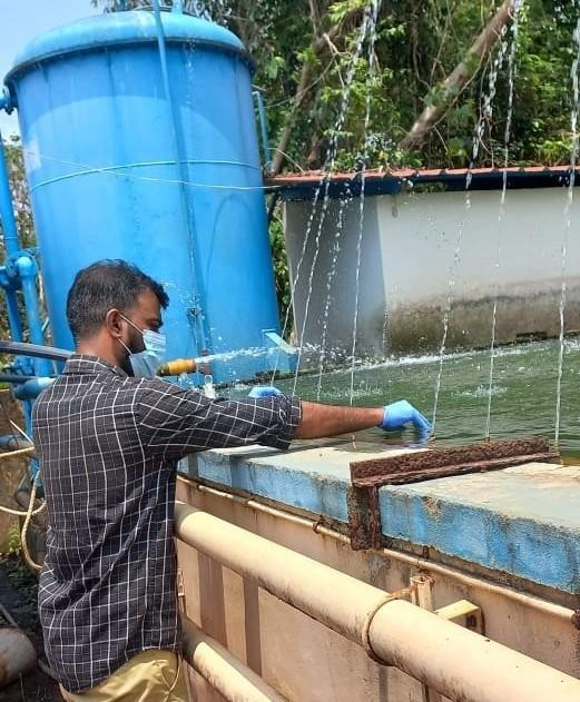
The Changing Face of Water Pollution
Twenty years ago, water pollution was something we could usually see. Oil slicks floating on rivers, untreated sewage entering streams, plastic bottles washed onto beaches and industrial discharge, these were clear indications that an ecosystem was in distress. Scientists measured nutrients, heavy metals and microbial contamination, assuming that these indicators captured most of the story. Today, we know that they do not. Some of the most important pollutants are now invisible. Tiny fragments of plastic, residues of medicines we consume, industrial chemicals designed to resist degradation, personal care products and hundreds of other synthetic compounds are quietly moving through rivers, estuaries, wastewater, groundwater and even drinking water. Some are present in extremely low concentrations, parts per billion or even parts per trillion, but are highly persistent, bioavailable and are now a significant problem for ecosystem and human health.
“The real challenge is not simply detecting pollutants, but understanding their journey through the environment.”
The Rise of Contaminants of Emerging Concern
One of the biggest misconceptions about Contaminants of Emerging Concern (CECs) is that they are “new” pollutants. In reality, many of these chemicals have been part of our daily lives for decades. What is new is our ability to detect them and understand their potential impacts. CECs include a diverse group of substances such as pharmaceuticals, antibiotics, endocrine-disrupting compounds, PFAS, personal care products, flame retardants and plastic additives. The sources of these contaminants in the environment include domestic wastewater, industrial activities, hospitals, agriculture and urban runoff. Many are biologically active, persistent and can build up in aquatic environments, although they can be present at very low concentrations. Their high abundance has challenged the conventional notion of water pollution and created a need for more comprehensive monitoring, improved wastewater treatment and science-based environmental policy. Our research findings over several years have mirrored this transformation in scientific thinking. The investigation added to a much more complicated picture of microplastic pollution in tropical aquatic environments. From studying the estuaries of Kerala to coastal ecosystems, wastewater treatment plants and indoor environments, the issue of microplastics was not always standalone, but rather came in clusters. They were often found alongside pharmaceuticals, per- and polyfluoroalkyl substances (PFAS), plastic additives, personal care products, flame retardants and other contaminants of emerging concern, suggesting that today’s aquatic environments are primarily impacted by multifaceted mixtures of contaminants.
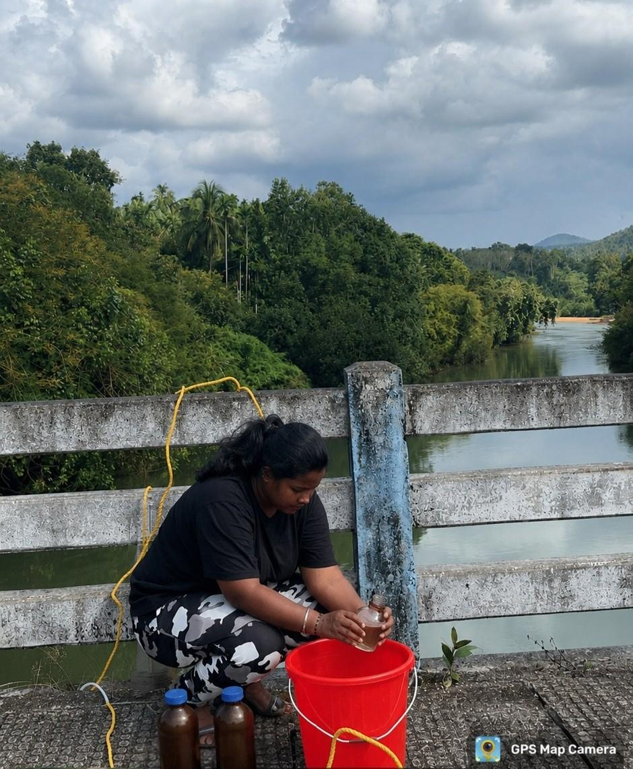
Microplastics: More Than Plastic Debris
Microplastics first attracted global attention because they were visible reminders of plastic pollution. But what we know about them has changed in leaps and bounds in the last 10 years. Today, we know that microplastics rarely travel alone. The most surprising finding was that microplastics were not simply passive debris floating through rivers and estuaries. They acted more like tiny environmental carriers, providing surfaces onto which other contaminants could attach and travel. They can carry pharmaceuticals, pesticides, heavy metals, PFAS, microorganisms and other pollutants in aquatic environments. It was this realization that shifted the way we understood pollution. We stopped questioning only the number of microplastics and started asking what they were carrying, how they reacted with other contaminants and what those interactions meant for ecosystem health. Microplastics, in many ways, are the tip of the iceberg for a much bigger story about the environment, beyond plastic.
The effects of microplastics and emerging contaminants have been studied in different aquatic systems in the tropical region of Southern India. Research conducted in the estuaries of Kerala showed that pollution is not homogeneous and that the degree of pollution varied between sites depending on human activities and environmental conditions. Furthermore, we discovered that elevated levels of microplastics were correlated with a larger number of emerging contaminants, highlighting the need to investigate mixtures of contaminants as opposed to contaminants alone. Our study along the Kerala coast has also produced useful baseline data for long-term monitoring and ecological risk assessment in tropical marine environments.
Why Conventional Wastewater Treatment Is Not Enough
Wastewater treatment plants were also identified as a key aspect of this problem in our investigations. While treatment facilities are very effective at removing suspended solids, nutrients, organic matter and disease-causing microorganisms, they were never designed to remove many of the synthetic chemicals found in modern medicines, consumer products and industrial activity. As a result, pharmaceuticals, PFAS, personal care products and other emerging contaminants can be observed in treated effluents and enter rivers, estuaries and coastal waters. These contaminants are continuously added to the environment through domestic and industrial uses. Protecting water quality today therefore requires not only better wastewater treatment but technologies that can provide solutions to these newly recognized pollutants. Monitoring programmes must also be developed, together with a greater understanding of the behaviour of emerging contaminants in the environment. Understanding these challenges has shaped the direction of our research. In addition to environmental monitoring, we have explored advanced treatment technologies capable of removing contaminants that resist conventional treatment processes. Hybrid photocatalytic-electrocatalytic oxidation systems have been found to be useful for degradation of persistent organic pollutants, while microbial fuel cells demonstrate the possibility of combining wastewater treatment with the generation of renewable energy. These strategies will work together to shift towards a more sustainable water management practice that involves addressing pollution and resource recovery as complementary functions.
New Technologies for Detecting Invisible Pollution
Detection of contaminants has increased greatly in the last decade. Scientists can now detect hundreds of compounds at extremely low concentrations that were previously unknown, using more sophisticated analytical methods such as high-resolution mass spectrometry. Meanwhile, technologies such asbiosensors, artificial intelligence, machine learning and wastewater-based epidemiology are transforming the way we look at environmental health. These tools are enabling scientists to go beyond basic water quality measurements towards more advanced smart water-quality tools that can detect pollution sources sooner and help inform evidence-based environmental stewardship.
The Future of Water Pollution Research
The greatest lesson from our research is that water pollution can no longer be understood by studying one contaminant at a time. Complex mixtures of plastics, chemicals and other emerging pollutants are present together in rivers, estuaries and coastal ecosystems, and the interactions of such mixtures are only partially understood. The next generation of research is about understanding the invisible pollutants that cannot be routinely monitored. The extent to which certain contaminants, such as nanoplastics, PFAS, pharmaceuticals and antimicrobial resistance, are understood is still limited, especially when they are found in combination as “cocktail” mixtures. Future research will increasingly combine environmental chemistry, toxicology, microbiology, engineering and data science to gain a deeper understanding of their behaviour and devise effective solutions. As critical as this will be is the ability of treatment technology to be sustainable and capable of removing persistent contaminants while generating useful resources. The ability to identify these contaminants, understand their interactions and create more intelligent and sustainable solutions will all be important for protecting our water resources. Innovation, teamwork and a new approach to pollution prevention will be needed to protect our water resources. This version is much better structurally because the Q&A information is no longer separated from the main story. I have preserved the author’s language as much as possible, while removing places where essentially the same statement occurred twice and making only minor grammatical adjustments for continuity.