A Silent Killer That Still Threatens Millions
Every year, the deadly parasitic disease visceral leishmaniasis (VL), commonly known as kala-azar, claims thousands of lives, yet it remains one of the world’s most neglected tropical diseases. Once transmitted by its vector sandflies, the parasite Leishmania donovani causes persistent fever, fatigue, weight loss, severe anemia, and swelling of the abdomen due to enlarged liver and spleen, making untreated visceral leishmaniasis almost invariably fatal. While existing medicines have saved many patients, they have not even nearly ended our battle against this deadly parasite. One of the greatest concerns facing scientists today is the rapid emergence of drug-resistant Leishmania parasites. Medicines such as sodium stibogluconate, miltefosine, paromomycin, and amphotericin B, which have long been the backbone of treatment, are becoming less effective in some endemic regions as the parasite evolves ways to survive them. Another major challenge is the toxicity of several existing medicines. Some drugs can damage the kidneys or liver, while others, such as miltefosine, cannot be used during pregnancy because they may cause birth defects. These limitations highlight the urgent need for safer, affordable, and easily administrable medicines. Equally concerning is that despite decades of research there is still no licensed human vaccine against visceral leishmaniasis.
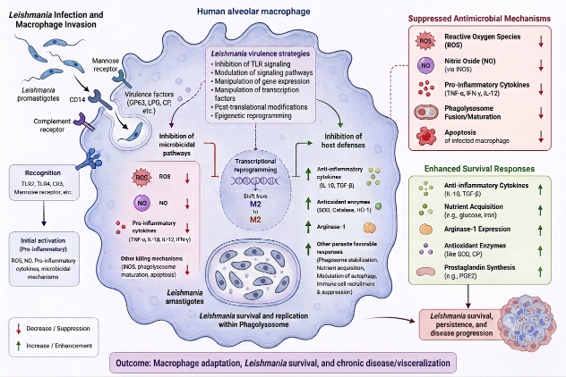
Tragically, the true burden of visceral leishmaniasis remains largely unseen. The disease mainly affects economically disadvantaged populations, where people often live in unhygienic conditions that expose them to sandflies carrying the Leishmania parasite. Coupled with limited access to healthcare and low disease awareness, many patients never receive a diagnosis or treatment. As a result, the true human toll of the disease is almost certainly far greater than official estimates suggest. Ironically, the agent of this neglected disease, Leishmania donovani, is one of the most sophisticated human parasites, hijacking host immune cells as their niche and rewiring their signaling, metabolism, antioxidant defense, and cytokine responses to promote its own survival. By suppressing protective immunity while activating pathways that protect infected cells, it establishes long-lasting infection. These remarkable strategies mark Leishmania as a valuable model for understanding host-pathogen interactions, immune evasion, and chronic infection. These remarkable survival strategies are also the reasons why extensive research is needed to come up with a permanent cure for VL.
Breaking the Parasite’s Defenses
The search for new drugs against VL has become an urgent need. To overcome the growing resistance of Leishmania to existing drugs, identifying new drug targets has become a major research priority. Numerous studies have focused on host cell proteins and receptors that are exploited by the parasite to establish infection and evade immune defense. Our recent study has identified the adenosine A2A receptor (A2AR) as a promising drug target because of the receptor mediated cAMP/PKA signaling pathway that activates heme oxygenase 1 (HO-1), the antioxidant enzyme that the parasite exploits to suppress host’s protective immune responses. These findings highlight the potential of host-directed therapies as a new strategy to combat drug resistance and improve treatment outcomes. However, because these drug targets are also essential for normal host functions, extensive research is needed to verify that targeting them is both safe and effective, without causing any unintended harm to the patient.
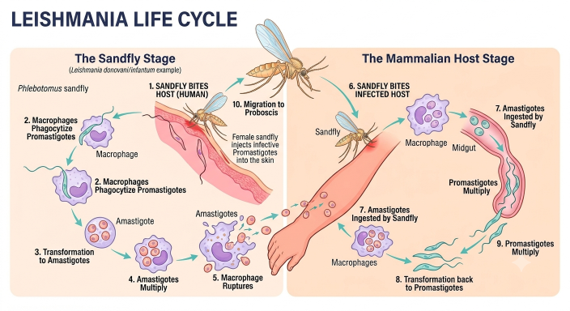
However, fighting against VL go far beyond discovering new drugs. Rapid advances in vaccine development are urgently needed to prepare the immune system in recognizing and eliminating Leishmania parasites before they can establish infection, but it is also one of the greatest scientific challenges. Leishmania hides and multiplies inside our immune cells, making it difficult for the body to detect and eliminate the parasite. Its complex life cycle and affecting host cell antigen presentation make it even harder to develop a vaccine against it.
New Technologies Offering New Hope
Because the disease primarily affects neglected communities and many cases go unreported, it often limits the attention, funding, and resources needed to advance scientific research. Despite these challenges, researchers around the world continue to progress in the fight against VL. One of the most exciting advances in the fight against VL is the application of CRISPR gene-editing technology. Scientists are identifying genes essential for the parasite’s survival and mutating them to develop live-attenuated vaccines by creating genetically weakened Leishmania parasites. These weakened parasites cannot cause disease but can safely stimulate the immune system to develop long-lasting protective immunity. At the same time, researchers are exploring innovative vaccines that target proteins in sandfly saliva. Because the parasite is transmitted through the bite of an infected sandfly, these vaccines aim to trigger an immune response at the very site of infection, stopping the parasite before it can establish itself in the body. One promising approach uses virus-like particles (VLPs) carrying GP63, a key Leishmania surface protein used to invade host cells and evade the host immune system. In preclinical studies, this vaccine strategy stimulated strong antibody and T-cell responses, reduced parasite burden, and protected mice from severe disease, highlighting GP63 as a promising candidate for future human vaccines. If successful, these next-generation vaccine strategies could significantly reduce disease transmission and move us closer to eliminating this devastating disease.
Early diagnosis is another critical piece of the puzzle. The first symptoms of VL closely resemble those of many other diseases, leading to delayed diagnosis and treatment. Although rapid diagnostic tests such as the rK39 strip have greatly improved the diagnosis of visceral leishmaniasis, they detect antibodies produced against parasite antigens rather than the parasite itself. Since these antibodies can remain in the body long after recovery, the test cannot always distinguish an active infection from a past one. It is also less reliable in immunocompromised patients since production of antibodies would be much less. Researchers are therefore developing non-invasive urine-based antigen tests and portable molecular techniques such as Loop-Mediated Isothermal Amplification (LAMP), which can accurately detect active infections without requiring sophisticated laboratory equipment.
The Next Generation of Treatments
The future of more effective visceral leishmaniasis treatment lies in developing drugs that directly target the parasite rather than the infected human cells. Researchers are identifying biological processes that are unique to Leishmania, allowing future drugs to kill the parasite while minimizing damage to healthy tissues. Promising targets include parasite kinases, proteases such as gp63, aminopeptidases, enzymes involved in sterol and folate metabolism, and proteins required for DNA replication and energy production. Because many of these molecules are absent from or structurally different in humans, drugs designed against them have the potential to selectively eliminate the parasite while minimizing toxicity to the host.
Drug delivery is also undergoing a transformation. Nanotechnology-based delivery systems are being designed to transport medicines directly to infected macrophages, the immune cells where Leishmania hides and multiplies. By delivering drugs precisely to infected organs such as the liver and spleen, these targeted formulations could increase treatment effectiveness while reducing toxicity to the rest of the body. Researchers are also working toward shorter, all-oral treatment regimens that are easier to complete than lengthy hospital-based therapies. Compounds derived from plants, microorganisms, and other natural sources are also being investigated as safer and more biodegradable alternatives to conventional drugs. At the same time, improvements in medicinal chemistry are helping optimize these compounds into effective therapies with fewer side effects. Combination therapies that use multiple drugs with different mechanisms of action would be an important strategy for slowing the development of resistance while improving treatment outcomes.
Towards a World Free of Kala-Azar
Over the next decade, research on VL is likely to become increasingly precise. Advances in genomics, immunology, single-cell technologies, and structural biology are revealing how the parasite survives inside immune cells and manipulates the body’s defense. Understanding these complex host-parasite interactions is helping scientists design new and better treatment that not only eliminate the parasite but also restore the immune system’s ability to fight infection naturally. However, eliminating visceral leishmaniasis will require far more than scientific breakthroughs alone. Countries where the disease remains endemic must work together to strengthen surveillance, prevent reemergence, and ultimately eliminate the parasite. At the same time, greater public awareness is essential so that people recognize the symptoms early and seek medical care without delay. Continued investment is needed to develop affordable medicines, shorter and more effective treatment regimens, and convenient oral therapies that are easier to administer in resource-limited settings. Equally important is the development of rapid, accurate, and inexpensive diagnostic tools that can be used even in remote locations. By combining scientific innovation with stronger public health efforts, international collaboration, and sustained political commitment, we can move closer to a future where VL is no longer a neglected disease but one that is controlled, and ultimately eliminated.