Beyond Biomarkers: Unlocking the Potential of Physiological Lithium for Precision Diabetes Care.
Insulin resistance (IR) is the fundamental metabolic defect underlying type 2 diabetes mellitus (T2DM) and precedes overt hyperglycemia by many years. Although considerable progress has been made in understanding insulin signaling, current therapeutic approaches largely focus on improving glycemic control rather than correcting the molecular defects that initiate insulin resistance. Increasing evidence suggests that trace elements are integral regulators of insulin synthesis, signaling, oxidative stress, and glucose metabolism, yet their precise physiological roles remain incompletely understood.
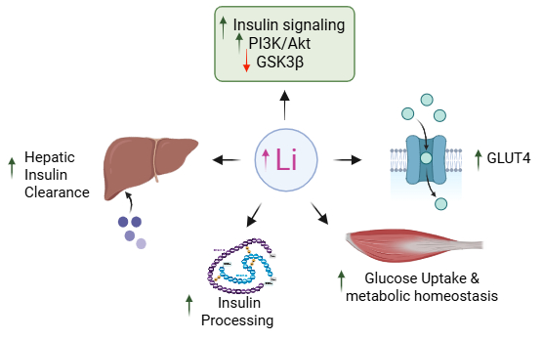
Our recent cross-sectional study demonstrated that lower physiological serum lithium concentrations are independently associated with increased insulin resistance, an elevated insulin-to-C-peptide ratio (ICPR), and a higher triglyceride-glucose (TyG) index, suggesting a potential role for lithium in regulating insulin sensitivity, hepatic insulin clearance, and glucose homeostasis. Rather than viewing lithium solely as a therapeutic drug for bipolar disorder, these findings suggest that physiological or dietary lithium may be an overlooked modulator of glucose homeostasis. However, the critical unanswered question remains whether reduced lithium concentrations contribute directly to the development of insulin resistance or merely reflect a consequence of, or a compensatory response to, the underlying metabolic dysfunction. Little is known about the optimal physiological lithium concentration for metabolic health, the effects of dietary and environmental lithium exposure, or lithium’s interactions with other essential trace elements such as magnesium, chromium, and zinc. Equally important, the molecular mechanisms through which physiological lithium regulates insulin action remain poorly understood. It remains uncertain whether restoring physiological lithium levels can reverse insulin resistance by activating the PI3K/Akt/GSK3β pathway, thereby promoting GLUT4 translocation, improving proinsulin processing, and boosting hepatic insulin clearance.
The relationship between lithium and pancreatic β-cell biology also warrants greater attention. Emerging evidence suggests that lithium-mediated regulation of GSK3β and autophagy may preserve β-cell survival under metabolic stress, but direct human evidence remains limited. Likewise, the observation that individuals with lower lithium concentrations exhibit higher insulin-to-C-peptide ratios raises intriguing questions about hepatic insulin clearance. Determining whether lithium influences insulin secretion, hepatic insulin extraction, peripheral insulin sensitivity, or all three processes will be essential for defining its physiological role. Unlike therapeutic lithium monitoring, which targets concentrations between 0.6 and 1.2 mmol/L, little is known about optimal endogenous lithium concentrations or the dietary, environmental, and genetic factors that determine them.
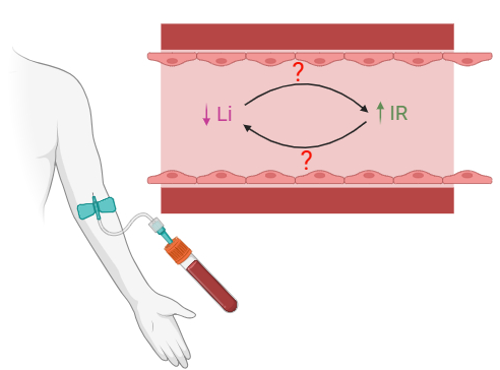
Addressing these questions will require a shift from observational associations to mechanistic and translational research. Well-designed randomized controlled trials are needed to determine whether restoring physiological lithium concentrations can improve insulin sensitivity and metabolic function, rather than merely correlating with them. Advances in analytical technologies will also be critical. Unlike ion-selective electrode methods, which were developed primarily for therapeutic lithium monitoring and lack the sensitivity to accurately measure ultra-trace physiological lithium concentrations, high-resolution analytical platforms such as inductively coupled plasma mass spectrometry (ICP-MS) will enable precise quantification of endogenous lithium and facilitate the establishment of population-specific physiological reference ranges. Future investigations should also incorporate phosphoproteomics, metabolomics, and transcriptomics to map lithium-responsive signaling networks. Equally important will be the application of advanced metabolic phenotyping, including hyperinsulinemic-euglycemic clamp studies, isotope-based assessment of hepatic insulin clearance, continuous glucose monitoring, and tissue-specific imaging, to elucidate how physiological lithium regulates insulin signaling and glucose metabolism in vivo.
One of the most promising developments is the shift from glucose-centred diabetes management towards mechanism-based precision medicine. Rather than relying solely on HbA1c or fasting glucose, future metabolic assessment is likely to incorporate molecular biomarkers that reflect insulin signalling, β-cell function, hepatic insulin clearance, inflammation, and micronutrient status. Another emerging innovation is the concept of nutritional pharmacology, in which the physiological restoration of essential micronutrients is used to optimize intracellular signalling pathways rather than to achieve pharmacological drug concentrations. In this context, lithium may represent an entirely new class of metabolic modulator that acts via endogenous signalling mechanisms rather than conventional glucose-lowering pathways. Equally exciting is the growing use of integrated biomarkers. Combining HOMA-IR, TyG index, proinsulin-to-insulin ratio, insulin-to-C-peptide ratio, and phosphorylation of PI3K/Akt/GSK3β provides a multidimensional assessment of insulin resistance across clinical, biochemical, and molecular domains. Such integrated phenotyping may substantially improve patient stratification and therapeutic monitoring. Artificial intelligence will further accelerate this transformation by integrating biochemical, molecular, genomic, dietary, and lifestyle data into predictive algorithms that identify individuals at greatest risk of insulin resistance before irreversible β-cell dysfunction occurs.
Over the coming decade, diabetes research is expected to move beyond symptom control towards correcting the molecular mechanisms responsible for insulin resistance. Nutritional trace elements are likely to attract increasing attention as regulators of intracellular signalling rather than merely dietary cofactors. Large multicenter longitudinal studies across diverse populations will determine whether physiological lithium deficiency precedes the onset of insulin resistance or simply accompanies established disease. If these observations are confirmed, randomized dose-ranging clinical trials will define the optimal lithium concentration required to restore metabolic homeostasis while maintaining long-term safety. Concurrently, mechanistic studies will increasingly focus on validating lithium-responsive signalling pathways in human tissues, particularly the PI3K/Akt/GSK3β axis, GLUT4 trafficking, mitochondrial metabolism, autophagy, and hepatic insulin clearance. These investigations may identify novel therapeutic targets that extend well beyond lithium itself. Clinical practice is also likely to evolve toward individualized metabolic profiling. Future diabetes risk assessment may integrate trace-element measurements, insulin-processing indices, molecular signaling biomarkers, and genetic susceptibility to enable earlier diagnosis and personalized interventions. If proven effective, low-dose lithium supplementation could become a safe, inexpensive adjunct to existing glucose-lowering therapies, shifting the focus from disease management to mechanism-based precision diabetes care.
Several developments are likely to shape this field in the near future. Prospective multicenter studies will determine whether serum lithium levels consistently predict incident insulin resistance and diabetes across geographic regions and dietary environments. Improved analytical technologies such as ICP-MS will establish reliable physiological reference ranges for lithium and clarify inter-individual variability. Researchers should also watch for mechanistic studies examining lithium’s effects on insulin signaling, hepatic insulin clearance, mitochondrial metabolism, and pancreatic β-cell preservation. Integration of trace element biology with multi-omics analyses, artificial intelligence, and precision nutrition is expected to yield a more comprehensive understanding of metabolic regulation than has been possible before. These developments are expected to transform our understanding of insulin resistance, shifting it from a disorder of impaired glucose metabolism to a condition of disrupted intracellular signalling influenced by genetics, nutrition, and trace-element biology. Perhaps the most transformative possibility is that physiological lithium may ultimately emerge not only as a biomarker but also as a modifiable determinant of metabolic health. Although considerable work remains before clinical translation, the convergence of nutritional science, molecular endocrinology, and precision medicine offers a compelling opportunity to redefine our understanding and management of insulin resistance. The coming decade is likely to determine whether this overlooked trace element becomes an integral component of next-generation strategies for diabetes prediction, prevention, and personalized treatment.