
Aging is a universal process characterized by a gradual decline in cellular and physiological functions across all organ systems. Apart from genetic composition, nutrition and hidden RNA molecules, including non-coding RNAs, also contribute to health and lifespan. Among these, long non-coding RNAs (lncRNAs) and microRNAs (miRNAs) are the critical regulators of health, metabolism, inflammation and longevity. LncRNAs are typically longer than 200 nucleotides and can regulate chromatin remodeling, DNA methylation, cellular signaling pathways, transcription, RNA stability, alternative splicing and miRNA activity through RNA-DNA, RNA-RNA and RNA-protein interactions. Aging-associated changes in lncRNA expression have been identified in several tissues, including the brain and testes. Many lncRNAs regulate pathways associated with cellular senescence, oxidative stress, mitochondrial dysfunction and genomic instability, all of which are hallmarks of aging. miRNAs are short non-coding RNAs typically 18-25 nucleotides, that can interact with specific mRNAs to negatively influence their stability and translation.
“Vitamins do more than just nourishing the body, they also help control hidden RNA molecules that influence how our cells function and how we age.”
On the other hand, vitamins are essential micronutrients required for normal cellular functions. They function as molecular regulators of metabolism, antioxidants, epigenetic control and immune response, thereby influencing cellular health and aging process. Vitamin B, vitamin C, and vitamin E act as antioxidants, combat oxidative stress and inflammation, and decline with age. The vitamin B group also acts as cofactors for enzymes which control metabolism. Vitamin C facilitates collagen function and stabilization by acting as a cofactor for hydroxylase enzymes involved in collagen maturation. Excessive reactive oxygen species damage DNA, proteins, and lipids, thereby accelerating cellular aging. Interestingly, ncRNAs also regulate oxidative stress pathways by modulating the activity of antioxidant enzymes and mitochondrial metabolism. Vitamin A and vitamin D are well-studied examples of the nutrient-mediated ncRNA regulation. The interplay between vitamins and ncRNAs reveals a new layer of molecular regulation that shapes health and lifespan.
In our laboratory, two long noncoding RNAs were cloned, characterized, namely LINC-RBE (long intergenic noncoding-rat brain expressed) and LINC-RSAS (long intergenic noncoding-repeat rich sense antisense) from the rat genome. The lncRNAs exhibit a distinct age-related expression pattern in the brain and testes of the rat. Their expression increased during maturation from young to adult and decreased during aging from adult to near-old rats. These lncRNAs are possibly processed into small noncoding RNAs, including piwi-interacting RNAs and miRNAs, in the immunological tissues of the rat. Vitamin A serves as a key metabolic regulator of cell differentiation, gene expression and embryonic development in vertebrates. All-trans retinoic acid (ATRA) is an active metabolite of vitamin A, which regulates gene expression at transcriptional and post-transcriptional levels through nuclear retinoic acid receptor heterodimers. The expression of LINC-RBE and LINC-RSAS is upregulated by ATRA in the cultured primary hippocampal neurons of the adult rat at transcriptional and post-transcriptional levels, respectively. This study provided the first evidence that ATRA upregulated lncRNA expression in the rat hippocampal neurons.
Further analysis showed that the cloned-RBE promoter was upregulated by ATRA and LINC-RSAS was post-transcriptionally stabilized by ATRA in the human neuroblastoma cells. ATRA induced differentiation of these cells into neuronal cells. Moreover, LINC-RBE and LINC-RSAS overexpression in these cells influenced cell proliferation/growth, cell cycle, caused DNA breakage/damage and cell death. Also, lncRNA expression + ATRA differentially regulated the expression of genes involved in adult neurogenesis and learning & memory. These two functions are regulated by the hippocampus in the mammalian brain and typically decline with aging and in neurological disorders. These findings highlight the functional significance of these two lncRNAs in neuronal cells and in the rat hippocampus during aging. In our recent review article, we represented that retinoic acid (vitamin A) regulates the expression of lncRNAs. Several lncRNAs, including HOTAIRM1, NEAT1, MEG3, LINC-RBE and LINC-RSAS, are regulated by retinoic acid through multiple direct and indirect mechanisms in different cellular systems. These lncRNAs participate in various biological functions including neuronal differentiation, apoptosis, chromatin remodeling, inflammatory signaling and aging. Thus, the interplay between retinoic acid and lncRNAs constitutes a network that may control cell fate, differentiation and aging. Further study on the precise mechanisms by which vitamins regulate lncRNA networks during aging will enrich our knowledge in this field.
“By understanding how vitamins and non-coding RNAs work together, we may uncover new strategies to promote healthy aging and prevent age-related diseases.”
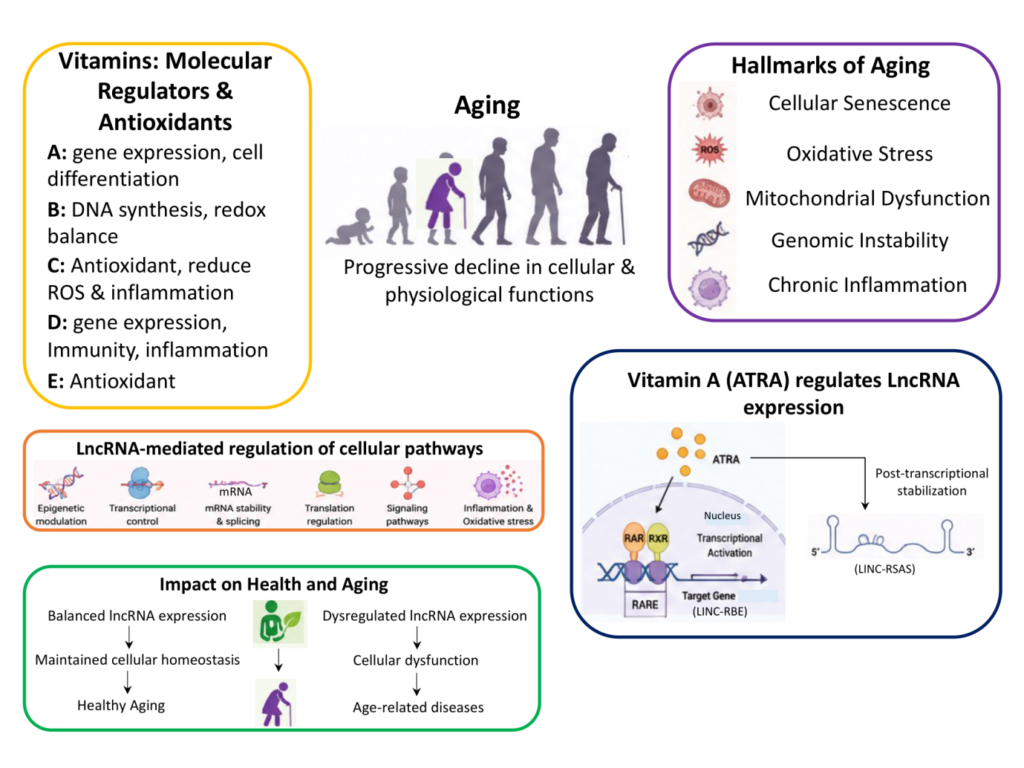
In conclusion, the interplay between vitamins and hidden RNA molecules has increased our understanding of biology of aging. Vitamins are not solely utilized as nutritional supplements but may act as molecular regulators to influence epigenetic and transcriptomic networks. In parallel, lncRNAs have emerged as critical regulators of neuronal function, cellular senescence, inflammation and age-related diseases. Together, vitamins and lncRNAs may influence development, tissue homeostasis and longevity. More knowledge about this interaction may pave the way for novel therapeutic strategies to promote healthy aging and prevent metabolic disorders and age-related diseases.