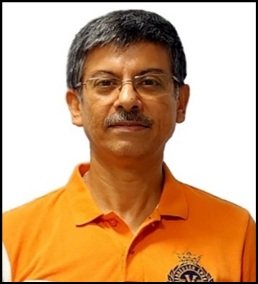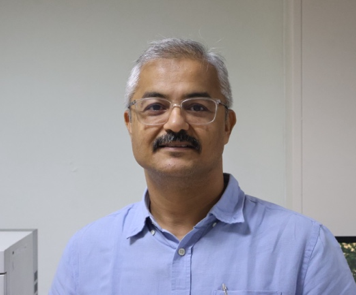
India stands at a profound juncture one where the pursuit of prosperity must align with planetary well-being. Scientific recognition, such as being listed among the Stanford/Elsevier Top 2% Scientists 2025, is not merely a personal milestone; it reflects the world’s acknowledgement that India’s sustainability research is gaining global momentum. At its core lies a transformative idea: waste is not an endpoint, but a beginning. My research journey, from regulatory foundations at the Gujarat Pollution Control Board to academic leadership roles in India and South Korea, has been driven by a mission to redefine our relationship with waste, resources, and environmental responsibility.
“The next revolution will be circular where waste becomes wealth, and sustainability becomes India’s greatest export to the world.“
The future belongs to circular systems where industrial and municipal waste streams become sources of clean water, renewable energy, fertilizers, and high-value bio-products. In our laboratories and pilot facilities, we integrate process engineering, sustainable chemistry, and environmental science to create biorefinery platforms that recover value from waste. These solutions reduce landfill dependence, remediate contaminated ecosystems, help industries decarbonize, and support healthy, resilient communities. This approach moves us from a linear “use-and-discard” model to a restorative industrial framework capable of strengthening climate resilience and resource security. The coming decade offers India the chance to define a global sustainability blueprint. Initiatives like Swachh Bharat, the Circular Economy Mission, and emerging waste and carbon-management frameworks provide fertile ground for innovation. Advances in AI, IoT, and biotechnology are converging to build smart waste-to-resource systems, where automation and predictive analytics optimize environmental performance and resource recovery. Yet the core challenge lies in scaling science from the bench to nationwide deployment. Progress demands robust techno-economic models, strong policy-industry alignment, infrastructure development, and incentives that reward circular innovation. Equally vital is ensuring this transition remains inclusive creating green jobs, building skills, and empowering communities traditionally marginalized in environmental decision-making.
To India’s young scientists and innovators: this is your moment. Think beyond silos breakthroughs live where science, engineering, policy, and society intersect. Pursue work with purpose, design ideas that scale, collaborate openly, and communicate science with clarity and conviction. Let your curiosity be bold, your perseverance steady, and your vision larger than yourself. The world is watching as India charts a path toward climate-aligned growth and circular innovation. Together, we can build a nation and a planet where progress and sustainability reinforce one another, and where waste becomes the foundation of a regenerative future.