This article is currently maintained under temporary RFCSR publication support until 13 June 2026.
The construction industry is one of the largest contributors to global carbon emissions, mainly due to the extensive use of Ordinary Portland Cement (OPC). In response to the growing demand for environmentally responsible construction materials, researchers are actively developing sustainable alternatives that can reduce environmental impact without compromising structural performance. Addressing this challenge, Dr. Saravanan S and Dr. Robin Davis developed an innovative construction material titled “Quaternary Blended Engineered Geopolymer Composite (EGC) Paver Block with Hybrid Fibre Reinforcement”, which has recently been granted a patent.
The patented technology focuses on the development of high-performance geopolymer based paver blocks using industrial by-products and advanced fibre-reinforcement techniques. Unlike conventional cement-based paver blocks, this system minimizes or eliminates the use of OPC by utilizing sustainable precursor materials such as Fly Ash (FA), Oxygen Furnace (OF) slag, Ground Granulated Blast Furnace Slag (GGBFS) and Silica fume (SFU), iron ore tailings (IOT) etc., from various sources such as thermal, steel and iron mining industries. These materials, which are often treated as industrial waste, are effectively transformed into value-added construction products.
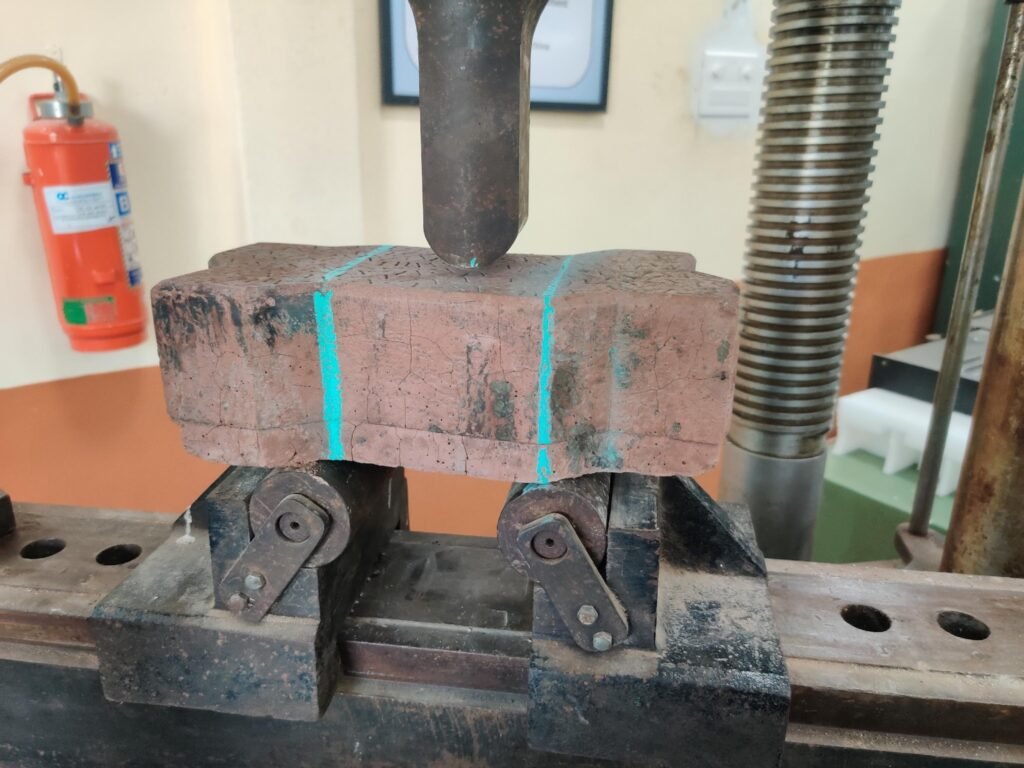
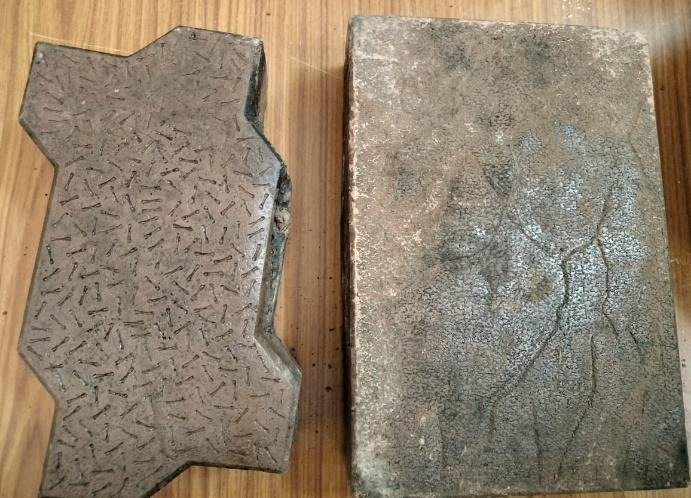
One of the key innovations of this patent lies in the use of a quaternary blended geopolymer matrix, combined with hybrid fibre reinforcement, to produce engineered geopolymer composites with improved mechanical and durability characteristics. The incorporation of hybrid fibres significantly enhances crack resistance, ductility, impact resistance, and load-bearing performance. As a result, the developed paver blocks exhibit superior strength and long-term durability compared to many conventional paving materials.
The technology also contributes to sustainability through waste utilization and reduction in carbon emissions associated with cement production. By converting industrial by-products into durable infrastructure materials, the patented system supports circular economy principles and promotes sustainable resource management. Furthermore, the improved durability and crack resistance of the developed paver blocks can reduce maintenance requirements and extend service life in practical applications such as pedestrian pathways, pavements, parking areas, and urban infrastructure systems.
Another important aspect of this innovation is its potential adaptability for large-scale manufacturing and infrastructure applications. The developed geopolymer composite system can be tailored for different engineering requirements while maintaining environmental benefits. The patent therefore represents a significant step toward greener and more resilient construction technologies.
This work reflects the growing global transition toward sustainable construction materials and low-carbon infrastructure solutions. The patented innovation demonstrates how scientific research can address both engineering performance requirements and environmental challenges simultaneously. Through this development, Dr. Saravanan S and Dr. Robin Davis aim to contribute to the advancement of next-generation sustainable construction materials for future infrastructure development.