Life on Earth is sustained by an extraordinary network of complex organic molecules and the countless chemical transformations they undergo to maintain biological function. In the early development of chemistry, it was widely believed that such organic compounds could only be produced within living organisms through a so-called “vital force.” This view was broken by the pioneering work of Friedrich Wöhler, who demonstrated that heating “ammonium cyanate” an inorganic compound—led to the formation of urea, an organic molecule. This landmark discovery provided compelling evidence that organic compounds could be synthesized in the laboratory from non-living precursors. The 19th century subsequently witnessed remarkable progress in synthesis of a vast array of molecules, including new materials, medicine, polymers, dyes and more. Importantly, synthesis of fundamental biomolecules such as sugars and amino acids not only advanced chemical science but also laid the foundation for modern understanding of prebiotic era and the molecular evolution that preceded the emergence of living systems.
Advances in bonding concepts and the development of sophisticated analytical techniques significantly propelled the growth of synthetic organic chemistry during the 20th century. However, the practical construction of complex organic molecules long remained the domain of exceptionally skilled chemists. This paradigm shifted with the introduction of retrosynthetic analysis by E. J. Corey. This transformative concept established a systematic and logical framework for deconstructing complex target molecules into simpler, readily available precursors, thereby rendering synthetic planning more rational, efficient, and broadly accessible.
Retrosynthetic analysis enables chemists to rationally design synthetic routes by identifying key bond disconnections and constructing molecules step by step making new C–C and C–X bonds by precisely controlling selectivity. This approach allows the construction of intricate, often unprecedented molecular architectures from simple building blocks derived from natural resources and petrochemical feedstocks, highlighting one of the most intellectually stimulating aspects of modern synthetic chemistry. Indeed, the deliberate stitching together of molecular fragments through the formation of covalent bonds—while finely controlling functional group compatibility, positional selectivity, and three-dimensional configuration—stands as a hallmark achievement.
Functional groups are the key determinants of molecular behaviour, serving as the primary reactive centers that impart characteristic chemical properties. Complex biomolecules consist multiple functional groups, their reactivity is exquisitely regulated by enzymes that are capable of achieving remarkable levels of chemo-, regio-, and stereoselectivity. Enzymes are masters of catalysis, evolved over millions of years, replicating such precision in reactivity in the laboratory remains one of the most significant challenges in synthetic chemistry. Chemists often rely on functional group interconversions or protection–deprotection sequences, which require additional synthetic steps, time, cost, and energy consumption, and reducing overall efficiency.
Consequently, the development of novel methodologies that enable direct and selective functionalization is of paramount importance. Precise control over functional group reactivity not only enhances chemoselectivity but also provides a powerful means to dictate regioselectivity. This is typically achieved through thoughtfully designed synthetic strategies that exploit subtle differences in electronic and steric environments within a molecule, allowing selective differentiation of otherwise similar reactive sites.
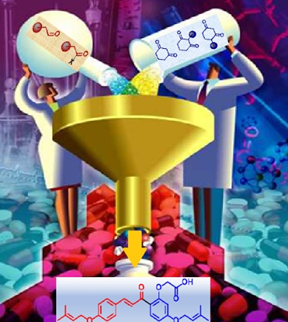
Resorcinols are an important class of benzenoid compounds having a benzene-1,3-diol framework, which is a key structural motif in large number of bioactive natural products. This scaffold is widely found in diverse molecular classes such as chalcones, chromanes, coumarins, flavones, benzofurans, xanthones, and terpenoids. These compounds exhibit a broad range of biological activities. In addition, resorcinyl ketones hold significant industrial relevance, as pharmaceuticals, agrochemicals, materials, perfumes, cosmetics and etc. Over the years, various synthetic strategies have been developed for the preparation of resorcinyl ketones, primarily starting from benzenoid precursors. However, these approaches face notable challenges. A major challenge lies in chemoselectivity, particularly the competition between O-acylation and C-acylation, which often necessitates protection–deprotection strategies. In addition, functional group tolerance becomes a critical limitation, especially when resorcinols are equipped with prenyl and geranyl terpenoid fragments. Regioselectivity further complicates the process, particularly in unsymmetrical resorcinols, where acylation frequently results in mixtures of isomers. Furthermore, reliance on benzenoid starting materials can restrict structural diversification, limiting access to a broader range of functionally diverse molecules with enhanced or tunable biological activities. We developed a new strategy using cyclohexane-based non-benzenoid starting materials that are commercially available on a large scale. These substrates are particularly attractive because multiple functional groups can be introduced prior to their conversion into resorcinol frameworks via oxidative dehydrogenation (aromatization). A key aspect of this approach is the installation of the acyl component through an aldol strategy, followed by direct dehydrogenation, which delivers the desired products in a highly selective manner.
These resorcinyl ketones were initially designed as analogues of the widely used organic compound Oxybenzone, which serves as a photoprotective agent in sunscreen lotions, cosmetics, coatings, and materials. Notably, the newly synthesized molecules in our lab exhibited superior photoprotective properties, efficiently absorbing UV radiation across the UV-A, UV-B, and UV-C regions, highlighting their potential for applications. Furthermore, our new methodology proved effective for the synthesis of terpene-based resorcinols, demonstrating its versatility in accessing structurally diverse and bioactive natural products. Notably, it was successfully applied to the synthesis of several bioactive natural products and their analogues, including Derricidin, 4′-O-geranylisoliquiritigenin, Derricin, Isocordoin, 4-hydroxyderricin, Crotaorixin, and Xanthoangelol. The method was further validated through the synthesis of Sofalcone, a clinically relevant drug used for the treatment of acute gastritis and exacerbations of chronic gastritis.