Physical wellness and global physical inactivity trends
A wellness-oriented lifestyle is a key determinant of functional health. Various lifestyle factors, such as physical activity, nutrition, emotional balance, and environmental conditions, collectively influence physiological functioning and overall health. Physical and nutritional wellness, which are closely linked, play particularly significant roles in shaping functional health. Sustaining optimal physical wellness throughout the lifespan is critical for promoting healthy ageing. Since physical wellness cannot be stored for future use, it must be maintained consistently throughout life. Establishing regular physical exercise habits from childhood is therefore essential for lifelong healthy ageing. The World Health Organisation (WHO) reports that global physical inactivity is increasing, which is expected to contribute to a substantial rise in non-communicable diseases (NCDs) worldwide. According to a major study cited in the WHO’s fact sheet on physical inactivity trends, 31% of adults currently do not meet the recommended 150 minutes of moderate or 75 minutes of vigorous physical activity per week. This proportion is projected to increase to 35% by 2030 if current trends continue. Furthermore, 80% of adolescents are physically inactive. The anticipated rise in NCDs due to insufficient physical activity may result in a significant increase in premature mortality and disability, as well as a financial burden potentially exceeding $300 billion by 2030.
“Physical literacy has the potential to substantially enhance intrinsic motivation, a factor that is essential for sustaining long-term physical activity within the population.”
Traditional Physical Education and sports on Physical activity behaviours
Traditional Physical Education programs in educational institutions, often characterised by student-centred and activity-based approaches, have not demonstrated effectiveness in achieving sustained behavioural change at the population level. Although participation in physical activities in educational settings may provide temporary motivation, it often does not lead to a lifelong commitment to physical activity. With the exception of a few European countries, rates of physical inactivity are generally rising, including in nations renowned for sporting success such as the United States and China. As a result, the dominant sports culture in these countries has not effectively promoted positive physical activity behaviours among the general population. Promoting intrinsic, self-motivated engagement in regular, evidence-based physical activity is essential for supporting lifelong adherence to physical activity behaviours even under difficult and adverse conditions. Within this context, the concept of Physical Literacy may play a pivotal role.
Physical Literacy-meaning and key aspects
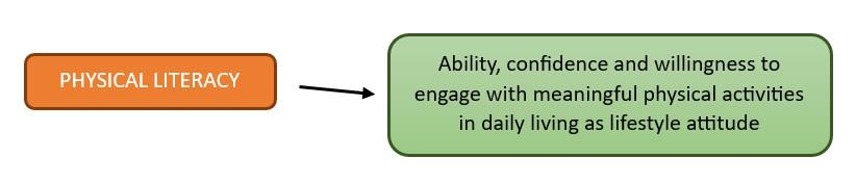
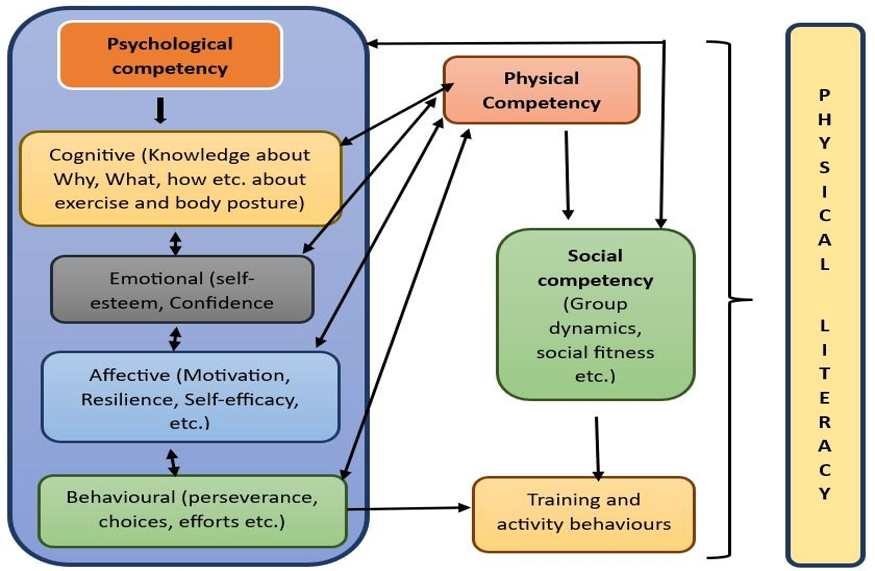
Physical literacy refers to the comprehensive set of attributes required to motivate individuals to engage in regular, scientifically informed physical activity, thereby optimising functional health. True physical literacy enables consistent participation in appropriate physical activities. The primary driving force in this process is intrinsic motivation, which encourages voluntary participation regardless of prevailing conditions, as individuals adapt and remain active. This intrinsic motivation arises from interconnected factors, including knowledge of exercise science, understanding the effects of physical activity on immunity and functional health, appreciation for aesthetics, and confidence to participate in various physical activities both individually and in groups. Such confidence is often developed through early engagement in physical activities and recognition of possessing adequate fitness. Additionally, competence in group settings for mutual benefit further enhances confidence, particularly as urban populations increasingly participate in recreational group activities such as marathon running and cycling. Therefore, intrinsic motivation and confidence significantly promote participation in both individual and group physical activities, shaping individuals’ physical activity behaviours and choices.
Mechanism of Physical Literacy
Physical literacy comprises three primary competencies that interact to promote physical literacy in individuals. Psychological competency can be categorised into four domains: cognitive, emotional, affective, and behavioural. These domains are mutually interdependent and are also linked with physical and social competencies. Cognitive competency in physical literacy requires individuals to understand the science of physical exercise, including the rationale for exercise, the selection of appropriate exercises based on individual needs and circumstances, safe exercise practices, and the significance of body aesthetics and posture management. This scientific understanding should also include interdisciplinary elements such as the role of nutrition in exercise. The rationale for regular exercise is informed by the concept of exerkines. Exercise science has demonstrated that physical activity stimulates nearly all organs and tissues to produce hormone-like substances known as exerkines, which circulate throughout the body and facilitate communication among organs to optimise and maintain physiological function, thereby enhancing immunity and overall health. A strong desire to achieve and maintain an aesthetically pleasing physique can also serve as a significant intrinsic motivator for exercise. Physical competence refers to possessing an optimal level of skill in executing physical tasks and maintaining physical fitness. Developing such competence typically requires consistent participation and practice from childhood, often facilitated by formal physical education and sports programs. Mastery of various physical skills can motivate individuals to engage in physical activities by fostering confidence and self-efficacy. When combined with knowledge of exercise science, which emphasizes the importance of physical activity for health, intrinsic motivation for physical activity is further enhanced. Additionally, social competence the ability to understand and adapt to social environments enables individuals to interact effectively within groups and communities, promoting both personal and collective physical activity interests. Physical literacy education should encompass physical, psychological, and social competence to continuously enhance overall physical literacy from childhood onward. A comprehensive understanding of these interrelated components helps individuals become more confident, self-motivated, and resilient, thereby increasing adherence to physically active lifestyles even under challenging circumstances. Ongoing physical literacy education from childhood through higher education fosters a sustained commitment to healthy physical activity and behaviours, ultimately supporting healthy ageing.
How to raise a healthier generation through Physical Literacy
National governments should enact new legislation and actively promote physical literacy education for all individuals. Achieving this objective requires a dual strategy: addressing both those within mainstream educational institutions and those outside formal education. For students in schools and universities, updating curricula and implementing changes is often more straightforward. However, reaching individuals beyond the classroom remains a significant challenge. Traditional physical education, which incorporates a variety of activities and sports, should continue for young children through middle school to foster skill development, fitness, and confidence. Equally important is the integration of scientific knowledge about exercise and body posture, introduced progressively from middle school through university as a compulsory, credit-based, and examinable component of education. The curriculum should systematically address all three pillars of physical literacy. For individuals outside formal education, governments should establish dedicated ministries and departments to implement digital and other outreach initiatives, thereby increasing accessibility to physical literacy. Collaboration with social organisations is also essential for disseminating these messages. In the current digital era, sharing information about physical literacy is more feasible than ever before. Although it may not be realistic to expect universal attainment of the highest level of physical literacy, it is imperative to ensure that all individuals acquire a solid foundation that enables them to remain active and healthy throughout their lives.