Mental health – an intimate topic of fascination, intrigue and stigma at the same time to many. In the era where we understand the laws of the universe better, connect to people on the other end of the globe within seconds- mind and mental health still pose a challenge in terms of understanding and following better practises for its upkeep. Fast paced life, distance from nature, evolution of the virtual world, never ending competition and ever changing technology at the pace unknown before, makes mental health- an elusive concept, almost as if human kind is being taxed for evolution of our intelligence and pre-frontal cortex.
“Mental health is not just about treating illness. It is about understanding the mind with compassion, strengthening it with science, and nurturing it with humanity.“
We have come a long way in the treatment modalities in mental health, from being chained and locked in an institute to the advent of effective medicines making community living possible for people with severe mental illness to further research to find the molecules with almost minimal side effects. What has caught my attention from the beginning in this field is Electroconvulsive therapy(ECT) – Shock treatment in lay language. Though the public has always boycotted this for its poor depiction in movies and novels, it still shines as one of the most effective biological treatment modalities since its invention in 1935. It shines even brighter as an option when medications fail to bring improvement making the mental health condition as treatment refractory, by bringing improvement in as high as half of them.
Effective research in the past has made it more humane, less with adverse effects. Mental health care act 2018 contributed to making it completely voluntary treatment with autonomous decision. My research has been to understand the mechanisms of this through one the novel investigative modality called resting state functional magnetic resonance imaging(rs-fMRI). Though we have a long way to understand the exact mechanism, we still found important biological underpinnings with the study. More acceptable, less invasive brain stimulation modality using magnetic waves in place of electricity called – transcranial magnetic stimulation (TMS) is another promising option. Specifically in common mental illnesses like depression, this can be an effective way to avoid medication and get better sooner too.
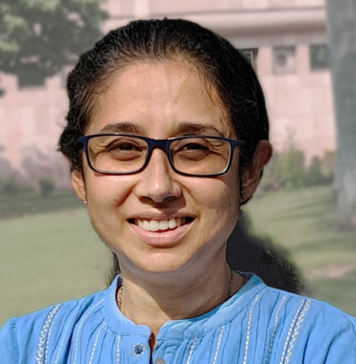
With keen interest and investment in biological research, I also have equal motivation to explore psychological aspects as well. The extent to which the western psychology has expanded its wings, eastern psychological principles are yet to catch up the pace. Amidst many challenges of being encoded in complex language and nuances, misinformed to be related to religion, we may be missing an important contribution of ancient Indian philosophy and spiritual knowledge relating to mind. Like yoga, the other aspects need to pick up pace too. The close association between body and mind makes using the body to help release complexities of mind, logical. Creative moment therapies exactly do that. Being a dancer myself, the inclination to use the form as a means of communication over and above speech to express ourselves is fascinating for me.
This still needs attention from Indians for the growth of this discipline at every level from more courses, candidates choosing and mastering the skill to clients preferring this modality.
Given our population and the burden of common mental illnesses, India will definitely make a mark when we choose to invest in improving mental health. When cutting edge biological interventions like rTMS are more accessible and part of the insurance system, ground level experience that comes from the utilization will feed better research questions. Young researchers taking keen interest in fields like Indian philosophy, spirituality, creative movement and art based therapies and its impact on mental health, and exploring this with openness and scientific vigor can make a huge impact. As a personal note, being introspective, flexible and inculcating the values in oneself makes us efficient, wholesome and mentally healthy contributors to the society.