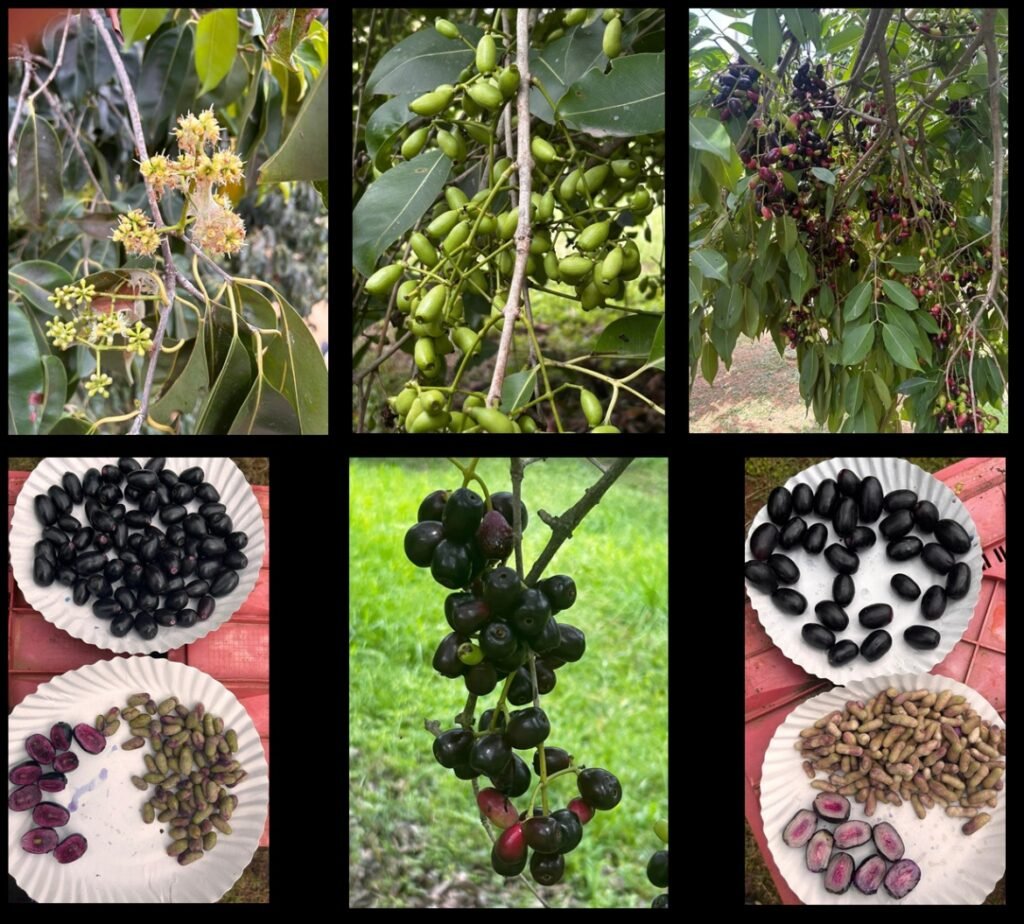
India’s landscapes hold extraordinary biological richness. Yet many of our indigenous fruit species remain quietly present rather than consciously valued. As a scientist working at the intersection of agrobiodiversity conservation and farmer livelihoods, my research at ICAR-IIHR has focused on documenting and utilizing the genetic diversity of native fruit crops in ways that strengthen nutritional security while creating sustainable economic opportunities for rural communities.
“Jamun shows that India’s native fruits hold powerful potential for nutrition, climate resilience, and rural prosperity.“
Jamun (Syzygium cumini Skeels) is one such fruit. For many of us, jamun evokes childhood memories- purple-stained tongue and fingers and its distinctive sweet-astringent taste. But beyond nostalgia lies a scientifically compelling story. Today, global markets celebrate blueberries, cranberries, and exotic imported “superfruits.” Yet jamun, growing across India’s diverse agro-climatic regions, possesses equally impressive (and sometimes) superior nutritional qualities. Rich in anthocyanins, phenolic compounds, and natural antioxidants, jamun supports metabolic health and combats oxidative stress. Its deep purple colour is not just aesthetic; it signals bioactive compounds with significant health relevance. However, not all jamun fruits are the same. In our recent work (Saini et al., 2026) examining morphological, biochemical, and molecular diversity, we observed remarkable variation among different genotypes. Some types produced larger fruits with higher pulp recovery-traits valuable for processing industries. Others showed significantly higher antioxidant potential. DNA-based analysis confirmed substantial genetic variability within the species. This diversity is not just scientific data. It acts as insurance. It determines how well a crop adapts to climate variability, pest pressures, and changing consumer demands. Jamun is naturally hardy and climate-resilient. With careful selection and scientific validation, it can become an important component of climate-smart horticulture/agroforestry systems.
Jamun’s bioactive compounds have drawn attention for their potential anti-diabetic and anti-inflammatory properties. Traditionally valued in indigenous systems of medicine, the fruit and seed extracts are now being examined through modern scientific lenses. For farmers, this scientific attention carries real implications. Jamun trees often grow on marginal lands, in homesteads, or scattered across village landscapes. With improved cultivar identification, vegetative propagation, and value-added processing, jamun cultivation can evolve from seasonal collection to organized horticultural enterprise. Functional beverages, natural food colorants, nutraceutical extracts, fermented products- the possibilities are expanding. Because jamun is perennial and relatively low-input, it fits well within agroforestry and biodiversity restoration systems. When biodiversity is linked to markets and value chains, conservation becomes economically meaningful. Farmers become custodians not just of land, but of genetic wealth.
For young researchers, jamun represents a powerful opportunity. Indigenous fruit crops sit at the intersection of fruit science, molecular biology, food science, computational biology, and rural development. There is scope for genome-level studies, metabolomic profiling, AI-driven compound screening, and climate adaptation research. These are not isolated academic exercises, they are pathways toward building resilient food systems rooted in local biodiversity.
The larger lesson from jamun is simple yet profound. India does not lack biological resources. What we often lack is systematic documentation, scientific validation, and translational pathways. When we apply modern tools to native species, we do not replace tradition, we strengthen it with evidence. Jamun is more than a seasonal fruit. It is a reservoir of nutritional strength, pharmacological promise, genetic resilience, and livelihood potential. In an era shaped by climate uncertainty and lifestyle-related health challenges, such indigenous crops deserve renewed scientific and policy attention. Sometimes innovation does not require discovering something entirely new. Sometimes it requires looking more closely at what has always been growing around us.